In a Huffington Post article, David Dunn has pointed out what he sees as hypocrisy on the part of Christian conservatives:
"It is the view that Christians should vote their values, and this means we should legislate moral evils into oblivion. Thus if we believe life begins at conception, we should vote against abortion! If we believe marriage is between one woman and one man, we should vote against gay marriage! And if we believe in caring for the sick and the poor, we should vote against "Obamacare!" ...Wait a minute! Do you see the political hypocrisy? The Christian Right votes for candidates who are anti-abortion and anti-gay (at least on paper) because it believes we must pass laws to protect marriage and protect life (at least embryonic life), but it is unwilling to apply the same principle to "Obamacare." Infants in the womb have a right to life, but apparently adults do not have a right to life-saving medical care."
There are several problems with the logic here. For one, you could simply flip this question and ask why the Christian Left thinks a baby has a right to free medicaid after it is born, but doesn't think we should prevent that baby from having a doctor induce a partial delivery, stick a pair of scissors in the back of its neck, and then suck out its brains with a suction machine.
Another problem is a failure to recognize where the government's powers can rightly be used, and where it cannot. Does anyone have a right to medical care? Everyone should certainly have a right to purchase it, but if you say that you have the right to medical care, you are saying you have a right to someone else's labor. Last time I checked, that was slavery. I don't have the right to go to a doctor, hold a gun to his head, and make him treat me or my family members.
On the other hand, does a baby have a right not to have a doctor insert scissors into the back of its head and suck its brains out? Yes. Regardless of what the Supreme Court may say, every human being has a right to life, liberty, and property that comes from God, not the government. The government cannot grant those rights, they can only respect and protect them, or allow them to be violated.
Now do the Scriptures say that we should give to the poor? Yes. The Scriptures do not say that we should lobby the government and force our fellow citizens to give to the poor. The Scriptures say that we should give to the poor.
The Scriptures certainly do not forbid a government from providing charity with tax money, but whether or not that is a good thing, and how that should best be handled is not a matter that the Church has a definite teaching on. Christians can disagree.
I have spent 20 years now, in my secular job, working in social services, which have included Medicaid, Food Stamps, TANF (formerly AFDC), and Child Support. I think some of these programs have some good aspects and should continue, but there is also a lot of waste, fraud, and abuse connected with these programs, and there are also problems with the way the government delivers them that encourage dysfunctional behavior. And so while all Christians agree that helping the poor is a Christian responsibility, it is not a self evident truth that the best way to accomplish that is more government welfare, or universal health coverage. I certainly would not suggest that those Christians who disagree with my take on that are not Christians because they don't see it my way, but they should return the favor, since the Church has no clear teachings on how government should handle public charity. For more on my opinions on welfare, see this podcast.
However, when it comes to baby killing or gay marriage, these are questions that the Church does have a clear teaching on. If you think it is OK for the government to not only allow for babies to be murdered, but have no problem when the government wishes to make Christians pay to kill those babies, then you are not only a hypocrite, you have departed from the Christian Tradition.
Martyr Theodosia of Constantinople, defender of Icons
David J. Dunn has begun a series of blog posts that continue issues related to our discussion on Ancient Faith Radio. His first post is Ancient Faith Continued: Theology and Symphony. I will post his comments in italics, and then my response:
I have met a lot of Orthodox Christians who see the Tradition as an unchanging deposit. They basically apply a naive fundamentalist biblical literalism to the Tradition of the Orthodox Church (“Tradition” with a “big-T” in the Orthodox Church refers to the Bible, creeds, rituals, dogmas, and diverse opinions of ancient theologians). For them, “the Truth” was delivered once in history, its meaning is clear, and thus our theology is unchanging and unambiguous.
We consider the Tradition to be an unchanging deposit, because as a matter of fact, this is what the Church believes it to be. St. Vincent of Lerins, who is famous for his definition of "Catholicity," wrote, commenting on 1 Timothy 6:20:
"But it is worth while to expound the whole of that passage of the apostle more fully, “O Timothy, keep the deposit, avoiding profane novelties of words.” “O!” The exclamation implies foreknowledge as well as charity. For he mourned in anticipation over the errors which he foresaw. Who is the Timothy of today, but either generally the Universal Church, or in particular, the whole body of The Prelacy, whom it behoves either themselves to possess or to communicate to others a complete knowledge of religion? What is “Keep the deposit”? “Keep it,” because of thieves, because of adversaries, lest, while men sleep, they sow tares over that good wheat which the Son of Man had sown in his field. “Keep the deposit.” What is “The deposit”?That which has been intrusted to thee, not that which thou hast thyself devised: a matter not of wit, but of learning; not of private adoption, but of public tradition; a matter brought to thee, not put forth by thee, wherein thou art bound to be not an author but a keeper, not a teacher but a disciple, not a leader but a follower. “Keep the deposit.” Preserve the talent of Catholic Faith inviolate, unadulterate. That which has been intrusted to thee, let it continue in thy possession, let it be handed on by thee. Thou hast received gold; give gold in turn. Do not substitute one thing for another. Do not for gold impudently substitute lead or brass. Give real gold, not counterfeit. O Timothy! O Priest! O Expositor! O Doctor! if the divine gift hath qualified thee by wit, by skill, by learning, be thou a Bazaleel of the spiritual tabernacle, engrave the precious gems of divine doctrine, fit them in accurately, adorn them skilfully, add splendor, grace, beauty. Let that which formerly was believed, though imperfectly apprehended, as expounded by thee be clearly understood. Let posterity welcome, understood through thy exposition, what antiquity venerated without understanding. Yet teach still the same truths which thou hast learnt, so that though thou speakest after a new fashion, what thou speakest may not be new" (St. Vincent of Lerins, Commonitory, Ch. XXII, NPNF2, 5:147).
And commenting on Galatians 1:8, but also alluding to Jude 1:3 ("...contend earnestly for the faith which was once for all delivered to the saints), St. Vincent says:
"Why does he say “Though we”? why not rather “though I”? He means, “though Peter, though Andrew, though John, in a word, though the whole company of apostles, preach unto you other than we have preached unto you, let him be accursed.” Tremendous severity! He spares neither himself nor his fellow apostles, so he may preserve unaltered the faith which was at first delivered. Nay, this is not all. He goes on “Even though an angel from heaven preach unto you any other Gospel than that which we have preached unto you, let him be accursed.” It was not enough for the preservation of the faith once delivered to have referred to man; he must needs comprehend angels also. “Though we,” he says, “or an angel from heaven.” Not that the holy angels of heaven are now capable of sinning. But what he means is: Even if that were to happen which cannot happen,—if any one, be he who he may, attempt to alter the faith once for all delivered, let him be accursed" (St. Vincent of Lerins, Commonitory, Ch. VIII, NPNF2, 5:136-137).
This of course does not mean that Tradition does not grow in the sense that it expands through history, as the Church confronts heresy, and as saints arise and add to the writings which guide and inform the Church. But as St. Vincent says in chapter 23 of his Commonitory, this is natural growth, not alteration.
David Dunn: "I disagree with this view. That does not mean I am a “liberal” theologian. I do not think that Tradition and culture are two “texts” with more or less equal weight. The Tradition is not fixed, but neither is it in constant, ambiguous flux. I see the Tradition more like a life-giving stream. It maneuvers through history, swinging sometimes this way and sometimes that in response to its place in the world at a particular point and time. For me, the Tradition is not nebulous, but it is nimble. We are caught up in that stream right now. We have a pretty good sense of where we have been, which gives us some indication of where we are going, but the exact “shape” of our destination and when we will get there are not entirely clear. I think that is why Fr. John Meyendorff said we have a “living tradition.” The Tradition is not an artifact of the past because it is where we live. The church is its tradition."
We have a living Tradition in that this Tradition is not just found in books, but is alive in the Church. There are still aspects of our Tradition that are not found in books, and require training within the Church... as anyone who has ever read liturgical rubrics can attest. The book may say "the priest stands in the usual place, and does the usual thing", but only by being instructed by a priest who knows what that means can another priest really understand the rubric. We do know what the Tradition will be in essence, because it cannot be other than what it always has been.
David Dunn: "To see Tradition as a fixed and fully knowable “thing” is to live in intellectual dishonesty, for it requires pretending that the way we view tradition is not informed by our moment in history. It is to pretend that we look at doctrine in the exact same way as our spiritual ancestors."
If David had said that we always have to be aware that our understanding of the Tradition as individuals is imperfect, then I would have no argument with him, however, the Church as a whole does have a full understanding of its Tradition, and if we remain in that Church and allow ourselves to be guided by that Church we will not stray.
But rather than speak in abstractions, let's take a concrete example. David is not sure that the Church will always condemn homosexuality, and does not think we should oppose gay marriage in the wider culture. The Church has a very clear Tradition that homosexuality is a sin, and it has a clear Tradition that marriage can only be between a man and woman who are eligible to be lawfully married to one another. The contemporary Church has also issued numerous statements at the level of the local Church and also on the pan-Orthodox level that gay marriage is unacceptable, and that Orthodox Christians should actively oppose it in the wider culture. So the question for David is, why are you rejecting the instruction of the Church?
David Dunn: "It is also not very Orthodox. The Tradition is about God, and the ideal way of knowing God in the Orthodox Church is to unknow God. We strive for apophasis, which is the experience of God as mystery. This does not mean God is irrational or that we should be irrational. It means God is mystery. Therefore the Orthodox Christian must always destroy her own intellectual idols. That is why I think fundamentalist views of the Tradition are unOrthodox."
David asserts that this in not very Orthodox, but has yet to cite any evidence from Tradition to back up that assertion. Apophatic theology is an approach to theology, but it does not negate God's self revelation, which we find recorded in Scripture and Tradition.
Also, introducing the word “fundamentalist” is not helpful, because basically when the word is used outside of its historic meaning (in reference to Protestant Fundamentalists) it is simply used as a synonym for “stupid”. When I have asked people who use the term in reference to Orthodox Christians, and have asked them to define what they mean by the term, I have yet to get a coherent definition that would not also condemn the Fathers and Saints of the Church.
David Dunn: "To put it another way, for me, I cannot think of the Tradition as a deposit because I do not think I have faith in a set of assertions. I think faith means to trust in that for which I hope, which means it is a kind of love."
David is equivocating here. Faith certainly means trust, but when we speak of "The Faith", it necessarily is a Faith that has actual content, that is either Orthodox or is not.
David Dunn: "The Orthodox ideal is apophasis because theology is nothing more than to love God with the intellect. Truth is that which we do not understand but love anyway. That is why I think we should never treat the Tradition as if it is something everyone can understand if they only think about it rationally. The way we think about the Tradition must always unthink itself because God is love, and love is infinite. God is always an undiscovered country."
I think David will be hard pressed to produce a single Father or Saint of the Church who would say that the Truth of the Orthodox Faith is something that "we do not understand, but love anyway," or that "The way we think about the Tradition must always unthink itself because God is love..." This may fly in a liberal Protestant seminary, but it is completely foreign to the Tradition of the Church.
Ex nihilo, nihil fit: "Out of nothing, nothing comes."
This is one of oldest truism of human reason. Laurence Krauss thinks he has proven this false, but note how he redefines "nothing" to have substance that can be weighed. This is nonsense. Nothing is no thing. Nothing has no weight, no particles, no anything. Nonsense is still nonsense, even someone with a Ph.D. spouts it.
Due to time constraints, there were a number of points in the discussion on gay "marriage" on Ancient Faith Radio that I was not able to make, and of course you always think of things you wish you had said after the fact, so let me hit a few points:
1. David Dunn raised the emotional hypothetical of a lesbian couple that had been raising a daughter together, and then if the legal mother should die unexpectedly, the state taking the child away from "the only other mother she has ever known".
Since I deal with custody issues in my secular job all the time, I know a bit about how this sort of thing works, and this is a red herring.
When my wife and I began having children we executed a will which appointed Fr. Joseph Huneycutt and his wife to be the guardians of our children if both my wife and I were to die while they were still minors. I did not have to marry Fr. Joseph to make that happen. Legalzoom.com is all that is needed to deal with such an issue.
Now might a child in a case like David describes be taken away from her mother’s gay lover? Yes, if that child had a non-sperm-donor father. But that would also be the case if the mother was legally married to another man. Every child has two parents, and normally both parents have rights to that child. If the mother had a child with a man, and went on to marry anyone else, the father still has rights, and if the mother passed away while the child was still a minor the father would have every right to take custody of the child, and that is as it should be.
One should also take a look at this blogs ongoing chronicle of how the legalization of gay "marriage" in Massachusetts has affected Christians there: http://www.massresistance.org/
3. When I raised the question of polygamy and consensual incest up, David dismissed it as an outlandish possibility. However, with the growing Muslim population in the country, why would legalized polygamy be far fetched, and what who proponents of gay marriage say to object to it? There is no basis for such an objection.
"Please hang around with people other than the Jacobse crowd! There are professors at our seminaries and hierarchs who agree with you; there are many, many lay people who are willing (indeed, anxious) to engage in meaningful dialogue around these issues; there are many, many priests who think about these issues in a loving, pastoral way and increasingly find themselves moving to the 'left' of Hopko. It says something rather sickening about the current state of affairs that I find myself hesitating to name names. But please don't buy the PR of the AOI crowd that they represent the "true" Orthodox view, the universal Orthodox view, or even a particularly dominant Orthodox view. They are loud, and they are bullies, and the results are dangerous. But the only solution is for those of us who hold different views, while being fully and faithfully Orthodox (or endeavoring to be to the degree our brokenness and God's Grace permits) to engage and to be heard. -- Rebecca Matovic (signing my name because there's too much silence and anonymity in the world these days)"
There are several curious things about this comment. For one, if the views of those who stand against the acceptance of sodomy as compatible with the Christian life are really just a vocal minority, why are the priest and bishops that Rebecca refers to unwilling to come out of the closet and say what they really believe? In the history of the Church, I cannot think of a single example of a champion of Orthodoxy that hid his views until the situation was more favorable... though I can think of many heretics in the history of the Church who did so. If what they believe is true, they should be willing to stand up for it, and let the chips fall where they may. The fact is, however, that these clergy (whoever they may be) are clearly cowards, who will not say what they really believe, clearly and unambiguously, because they know their views are at odds with both the Tradition of the Church and the vast majority of the clergy and faithful of the Church. It is just a fact that every conciliar statement that has been made by the Orthodox Church on the question of homosexuality or gay "marriage" has taken a clearly Traditional view, and declared homosexuality to be a sin, condemned by both Scripture and Tradition, and gay "marriage" to be a distortion of the meaning of marriage and something that Orthodox Christians should oppose publicly -- and that includes the OCA, the jurisdiction that Rebecca belongs to.
As for the charge of bullying, this is a typical liberal red herring when they find themselves without a substantive argument, and have nothing else to appeal to. If one takes a clear stand, and challenges their opponents to do the same, and refute their opponents, this is what is known as rational discourse. It is in fact those on the other side of this issue that prefer to engage in personal attacks rather than deal with the issues. All that they have are emotional Oprah-like arguments, and ad hominem. On the substance of the issues, they have nothing... and they generally don't have the courage to come right out and say what they really believe.
And here are two lectures by Dr. Robert Gagnon that lay out how the other side has nothing, in great detail:
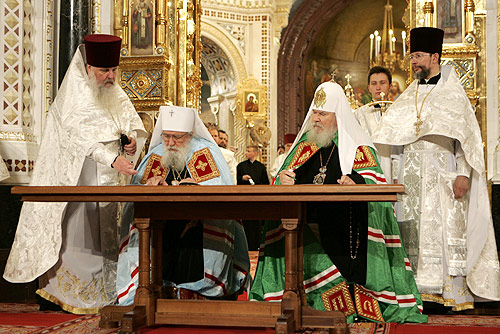
Since that time, the restoration of full communion between the faithful inside and outside of Russia has born tremendous fruit. I know of no one who supported reconciliation who has expressed the slightest regret, and I know of many who were skeptical who have come to see that their fears have not materialized.
It was a joyous occasion to witness, and it is a joy to reflect on it.
Aaron and Miriam confront Moses about his Ethiopian wife
In the various debates about gay "marriage" that are currently raging, from time to time you have people comparing it to interracial marriage, and some even going so far as to claim that the Bible condemns interracial marriage. This is of course nonsense. Nowhere does the Bible condemn interracial marriage, in fact we find an example of interracial marriage in the life of one of the most important persons in the Bible -- the Prophet Moses.
If you remember the movie the Ten Commandments, you will recall that it begins with Moses coming back in triumph from a campaign against the Ethiopians. You might also recall the Ethiopian princess who seems to rather admire Moses. This was based on Jewish Tradition, which is found in the Antiquities of the Jews, by the 1st century Jewish historian Josephus. According to Josephus, Moses actually married this princess, whose name was Tharbis:
"Tharbis was the daughter of the king of the Ethiopians: she happened to see Moses as he led the army near the walls, and fought with great courage; and admiring the subtility of his undertakings, and believing him to be the author of the Egyptians' success, when they had before despaired of recovering their liberty, and to be the occasion of the great danger the Ethiopians were in, when they had before boasted of their great achievements, she fell deeply in love with him; and upon the prevalency of that passion, sent to him the most faithful of all her servants to discourse with him about their marriage. He thereupon accepted the offer, on condition she would procure the delivering up of the city; and gave her the assurance of an oath to take her to his wife; and that when he had once taken possession of the city, he would not break his oath to her. No sooner was the agreement made, but it took effect immediately; and when Moses had cut off the Ethiopians, he gave thanks to God, and consummated his marriage, and led the Egyptians back to their own land" (Antiquities of the Jews 2:10:2).
None of this is recorded in Scripture, however, we do find mention of Moses' Ethiopian wife in Numbers 12:
"Then Miriam and Aaron spoke against Moses because of the Ethiopian woman whom he had married; for he had married an Ethiopian woman. So they said, “Has the Lord indeed spoken only through Moses? Has He not spoken through us also?” And the Lord heard it. (Now the man Moses was very humble, more than all men who were on the face of the earth.) Suddenly the Lord said to Moses, Aaron, and Miriam, “Come out, you three, to the tabernacle of meeting!” So the three came out. Then the Lord came down in the pillar of cloud and stood in the door of the tabernacle, and called Aaron and Miriam. And they both went forward. Then He said, “Hear now My words: If there is a prophet among you, I, the Lord, make Myself known to him in a vision; I speak to him in a dream. Not so with My servant Moses; he is faithful in all My house. I speak with him face to face, even plainly, and not in dark sayings; and he sees the form of the Lord. Why then were you not afraid to speak against My servant Moses?” So the anger of the Lord was aroused against them, and He departed. And when the cloud departed from above the tabernacle, suddenly Miriam became leprous, as white as snow. Then Aaron turned toward Miriam, and there she was, a leper. So Aaron said to Moses, “Oh, my lord! Please do not lay this sin on us, in which we have done foolishly and in which we have sinned. Please do not let her be as one dead, whose flesh is half consumed when he comes out of his mother’s womb!” So Moses cried out to the Lord, saying, “Please heal her, O God, I pray!” Then the Lord said to Moses, “If her father had but spit in her face, would she not be shamed seven days? Let her be shut out of the camp seven days, and afterward she may be received again.” So Miriam was shut out of the camp seven days, and the people did not journey till Miriam was brought in again. And afterward the people moved from Hazeroth and camped in the Wilderness of Paran."
The only objection found in Scripture is to "foreign wives" who had not converted to the Israelite faith, and so were a snare to their husbands.
So does the Bible condemn interracial marriage? Hardly, it condemns marrying outside of the Faith, but it condemns those who condemn interracial marriages because they are interracial. There are only two races in the Bible: the fallen race of Adam, and the race of Christ.
"Thus, too, did Moses also take to wife an Ethiopian woman, whom he thus made an Israelitish one, showing by anticipation that the wild olive tree is grafted into the cultivated olive, and made to partake of its fatness. For as He who was born Christ according to the flesh, had indeed to be sought after by the people in order to be slain, but was to be set free in Egypt, that is, among the Gentiles, to sanctify those who were there in a state of infancy, from whom also He perfected His Church in that place (for Egypt was Gentile from the beginning, as was Ethiopia also); for this reason, by means of the marriage of Moses, was shown forth the marriage of the Word; and by means of the Ethiopian bride, the Church taken from among the Gentiles was made manifest; and those who do detract from, accuse, and deride it, shall not be pure. For they shall be full of leprosy, and expelled from the camp of the righteous" (Against Heresies, 4:22:12).
VesperalLiturgies are appointed by the Typikon to be done only on days of strict fasting, and they are preceded by either the Lenten Hours or by Royal Hours. It is done in the evening because on days of strict fasting you do not break the fast until vespers -- though the latest that these services are actually appointed to be done is about 3 p.m. So to use this liturgical form for a day of feasting is to set the form on its head. Also, if you were doing a vesperal liturgy for the feast of the Dormition for example, you should do it on the day of the feast, not on the eve. Another problem is that on a feast day, you normally have a Vigil, and then the hours and the Liturgy. The Vigil usually consists of Vespers, with a Litia, Matins, and the first hour. When you reduce a feast to a Vesperal Liturgy you are taking about the first 30 minutes or so of the Vigil, and slapping it on to the second half of the Liturgy, and skipping everything in between, which is the bulk of the liturgical material appointed for the feast.
Now the issue of people attending the Liturgy on a weekday is a problem, but there are better solutions. The Antiochians (at least under Bishop Basil) have started doing Vespers, Matins, and the Liturgy all straight through in evening prior to the feast.... which is consistent with the Greek Style Agrypnia. More traditionally, an Agrypnia begins in the evening, and the Liturgy concludes after midnight, but at least this solution actually celebrates the festal services in a fairly full manner.
What we do in my parish is we do the vigil the night prior (which anyone working regular hours can attend, if they don't live too far away (Houston weekday traffic being a bit of a problem for some), and then we do the Liturgy at 6:00 am, which means most people could make it to work without having to take time off.
Of course everyone's job is a bit different, but even when I was a laymen, I always made an effort to take off time to attend feast day liturgies (which were celebrated later in the morning at the parishes I attended). But if it is not possible for someone to make it to the Liturgy, it would be better for them to attend a full feast day vigil, and just read the Typika for the feast before going to work the next day, then to attend a truncated feastday vesperal liturgy that was celebrated the day prior.
Also, one of the problems with making up abbreviations that truncate the services, is that eventually what is done for the sake special circumstances eventually becomes the norm, and the future abbreviations are done on the already truncated service. Eventually the onion is peeled until there is no onion left. If you take a look at what happened in the Roman Catholic Church, on a parish level, the average catholic today doesn't even know what Vespers, Matins, or the Hours are, because the only thing that is left is the Mass, such as it is these days.
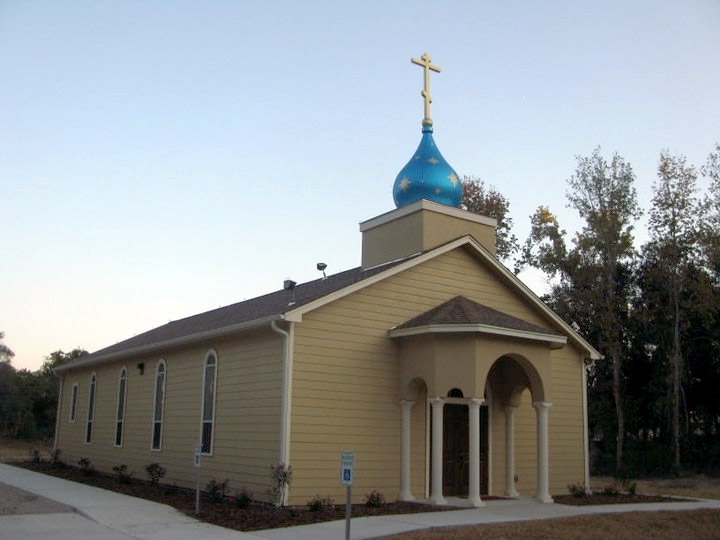
St. Jonah Orthodox Church in Spring invites
you, your family, and your friends to an Open House on Saturday, May 12, 2012
from 10:00 a.m. to 4:00 p.m. Come celebrate our new church building with free
food, fun, games, and other activities – including a unique "Noah's
Ark" moonwalk for the kids! Tour a traditional Orthodox church and view a
selection of antique Russian icons from our Biennial Icon Exhibit. Admission is
free. Books, icons, and other items will also be available for purchase. For a
map and further information, see our online directions with an
interactive map, or call 281-467-0264.
The Canons of the Church: Changeable or Unchangeable? by Nicholas N. Afanasiev, St. Vladimir’s Theological Quarterly 11, no. 2 (1967). First published in Russian in Zhivoe Predanie, Paris, 1936, YMCA Press, pp. 82.96. Translated by James Labeau:
Here is a homily I gave on the Sunday of Orthodoxy Vespers, sponsored by the Orthodox Clergy Association of Southeast Texas, March 16, 2008, the day of Metropolitan Laurus repose. I had been asked to talk about the significance of the reconciliation which had happened the previous May, but the passing of one of the two persons most responsible for that taking place put things into a very different light:
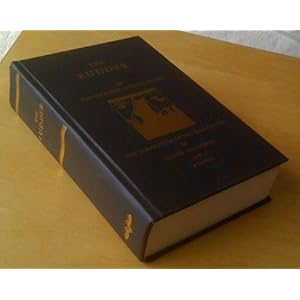
I recently finished reading "A Practical Handbook for Divine Services" by Fr. Gregory Woolfenden. This is a book that is primarily written for the benefit of priests and deacons, and gets into the details of how the services are actually done on a level that you usually do not find in service books or books on the rubrics of the services. The practice it reflects is largely the same as what is typically found in ROCOR, but there are differences. The author is a priest of the Moscow Patriarchate, serving in Great Britain, and is based on material published in Russian which is published by the Moscow Patriarchate. Nevertheless, in those areas where there are differences, it is useful to be aware of other practices that are out there, and in most cases, the practices are essentially the same. This book fills a gap in the material that has been available in English. I hope that one day we will see something like this published from someone who details the practices found in ROCOR in a similar fashion, or perhaps a future edition of this book that enhances the footnotes in that direction (though the footnotes are quite extensive as it is). I found it very helpful myself, just to review some of the fine points, and where the book differs from what I have seen, it has prompted me to ask questions of other clergy to see what is normally done in their experience.
As Bishop Jerome says, when speaking of various liturgical differences, there are seven ways to do everything, and there are seven ways to do each of the seven ways. A book that detailed all of these variation might be a bit cumbersome, but at least you will find one of the seven ways laid out in detail in this book. Diversity of liturgical practice is a healthy thing, but hopefully this book will help fight differences that are just matters of sloppiness or ignorance.
Laymen who are interested in better understanding the services will also benefit from this book. The services function on many different levels, and this book will help the laity better understand a dimension of the services that often happens out of their view. A great deal of the symbolism of the services are found in the liturgical actions of the clergy, and all Orthodox Christians should seek to better understand them.
"It must be remembered that power was granted by God, and to avenge crime the sword was permitted; he who carries out this vengeance is God's minister (Romans 13:1-4). What motive have we for condemning a practice that all hold to be permitted by God? We uphold, therefore, what has been observed until now, in order not to alter the discipline and so that we may not appear to act contrary to God's authority." Ad Exsuperium, Episcopum Tolosanum, PL 20,495.
St. Paul, on the other hand was of the opinion that "All scripture is given by inspiration of God, and is profitable for doctrine, for reproof, for correction, for instruction in righteousness: that the man of God may be perfect, thoroughly furnished unto all good works." (2 Timothy 3:16-17).
One has to wonder how long the OCA will allow him to present himself as a retired OCA bishop, and thumb his nose at the Tradition of the Church.
Recently, in a lecture given by Fr. Thomas Hopko, which has been posted on Ancient Faith Radio, Fr. Thomas made an argument very similar to things I have heard him say previously. He asserted that the Bible is full of contradictions, but that this is no big deal for us as Orthodox Christians, because we don't have to worry about how to reconcile them. As an example of such contradictions -- in fact the clearest example, according to Fr. Thomas -- he pointed out that the four Gospels all have different inscriptions on the Cross of Christ. Here are what the four Gospels actually record:
"THIS IS JESUS THE KING OF THE JEWS" (Matthew 27:37)
"THE KING OF THE JEWS" (Mark 15:26)
"THIS IS THE KING OF THE JEWS" (Luke 23:38)
"JESUS OF NAZARETH, THE KING OF THE JEWS" (John 19:19)
And he concludes his comments on this question with the statement "So much for historical accuracy."
Does this example prove that the Bible contradicts itself or is in error? No. For one thing, if someone gives an approximate quotation of something, and another person gives a more precise quotation, and these two quotations essentially agree, but the more precise quote provides more detail, have they contradicted each other? No... they have corroborated each other.
If someone asked you to tell them about one of your parents, you would probably tell a series of stories, and in those stories there would be no doubt some quotations. The stories would probably not be in chronological order, and the quotations would probably not all be exactly verbatim. Now would it be just or fair if someone who knew that parent jumped up and called you a liar or a spreader of misinformation because your stories were not chronological, or because your quotations were approximate quotations? No. You had no intention of providing a precise chronology, or to provide a Dictaphone account. You were asked to tell what your parent was like, and you did so, selecting the most meaningful stories that communicated who they were, and providing quotes that were substantively accurate.
A parent's obituary may be true and their child's recollections may also be true. The obituary may be more precise and more strictly chronological, but the child's recollections are not less true... in fact they tell you a lot more about the person. An obituary has one purpose and the remembrances a child may share have another purpose.
The Gospels do not have the intention of providing a strict chronology, they have the intention of telling us who Jesus Christ was, what he did, and what all that means. If they fulfill that intention accurately, to hold them up to standards that they did not intend to fulfill is wherein lies the error.
Aside from all of that, we are told in two of the Gospels that the inscription on the Cross was written in three languages: Greek, Hebrew, and Latin:
"And an inscription also was written over Him in letters of Greek, Latin, and Hebrew: THIS IS THE KING OF THE JEWS" (Luke 23:38)
"Then many of the Jews read this title, for the place where Jesus was crucified was near the city; and it was written in Hebrew, Greek, and Latin" (John 19:20).
Furthermore, we are told who wrote the inscription -- Pontius Pilate (John 19:22).
Now if Pontius Pilate wrote this inscription in three languages, we can be sure that he was not equally conversant in all three languages. There would have been very little reason for him to have mastered Hebrew or Aramaic, for example. Therefore, it is quite likely that the three inscriptions were not precise translations of each other. Gleason Archer, in his book "The Encyclopedia of Bible Difficulties", suggests the following texts (which I am putting in English, though he puts them in Aramaic, Latin and Greek, respectively) based on a number of factors he details:
Aramaic: This is Jesus, King of the Jews.
Latin: This is the King of The Jews
Greek: Jesus of Nazareth, the King of the Jews.
I cite this, not because there is any way we can be sure that this is how the inscription was actually written, but simply to point out that there are a number of plausible ways to explain the differences we find in the Gospels, and there is absolutely no basis for taking something like this, and dismissing the historical accuracy of the Gospels.
There are two basic problems with making the concession that the Scriptures contain actual errors:
1. The Fathers never make such a concession. You will never find a single Father of the Church that concedes that
there are real errors or real contradictions in the Scriptures. When
they encounter things that on surface appear to be contradictions on
some level, they always explain how they are not contradictory rather
than concede that they are real contradictions.
2. Once you go down that road, it does not stop with inconsequential errors. If you have followed some of the recent discussions about homosexuality that have been going on, particularly within the OCA, you will see that people are suggesting that St. Paul was a misogynist 1st century Jew, who had a limited understanding of sex in general and homosexuality in particular, and so perhaps some of his statements on the subject just got it wrong, or perhaps we was only talking about homosexuality in negative terms because he associated it with paganism. Had he only understood what a loving committed homosexual relationship could be, perhaps he might have come down differently on the question. This is the fruit of those who teach that the Scriptures are full of contradictions.
This is also a fundamental denial of the real inspiration of the Scriptures. If the Scriptures really are entirely inspired by God, then by that very fact, no error could be contained in it, because God does not err. If you allow that the Scriptures contain real err, then you are allowing that the Scriptures are not completely inspired, and then the question is, what parts are inspired, and what parts are not.
Now, we have to ask: In what sense the Scriptures are inerrant? The Scriptures contain quotes from the Devil, which are not truth, but truly quoted. There are differences between passages of Scripture that are not contradictory, but provide different details.
We believe that Scripture does not contain any error in anything that it intends to convey. I think St. Augustine put it about as well as anyone has:
"For I confess to your Charity that I have learned to yield this respect and honour only to the canonical books of Scripture: of these alone do I most firmly believe that the authors were completely free from error. And if in these writings I am perplexed by anything which appears to me opposed to truth, I do not hesitate to suppose that either the manuscript is faulty, or the translator has not caught the meaning of what was said, or I myself have failed to understand it" (Letter to St. Jerome, 1:3).
"Don't worry, dearly beloved, don't think sacred Scripture ever contradicts itself, learn instead the truth of what it says, hold fast what it teaches in truth, and close your ears to those who speak against it" (Homily 4:8 on Genesis, The Fathers of the Church: St. John Chrysostom, Homilies on Genesis 1-17, trans. Robert C. Hill (Washington, D.C.: Catholic University of America Press, 1986), p. 56).
And commenting on the Apostle John's use of Isaiah, he wrote:
"He desires hence to establish by many proofs the unerring truth of Scripture, and that what Isaiah foretold fell not out otherwise..." (Homily 68 on the Gospel of John).
St. Clement of Rome wrote:
"Ye have searched the scriptures, which are true, which were given through the Holy Ghost; and ye know that nothing unrighteous or counterfeit is written in them" (1 Clement 45:2-3).
The Fathers would never attribute error to Scripture, but unlike the Fundamentalist Protestants, they did not feel the need to be able to explain everything in Scripture. There are questions one can ask about Scripture, particularly with reference to apparent contradictions, and affirm that the Scriptures are without error, but not claim to know with any certainty how to explain a given problem.
That the Scriptures are the inspired word of God is a faith affirmation for which we can give reasons and evidence, but which is incapable of empirical verification of falsification. And so for example, I do not have to reconcile Genesis 1-2 with the current science of the day. I can try, but since I am not inerrant, my conclusions on that may or may not be accurate. But I can confess with St. Augustine that "...if in these writings I am perplexed by anything which appears to me
opposed to truth, I do not hesitate to suppose that either the
manuscript is faulty, or the translator has not caught the meaning of
what was said, or I myself have failed to understand it." The Truth of Scripture does not depend on my ability to fully comprehend it, but to be faithful to the Orthodox Tradition I must confess that the Scriptures are fully inspired, without error, and that it is I who need to be corrected by the Scriptures, rather than the Scriptures that need to be corrected by me.
Now some contemporary Orthodox writers accuse anyone who says that the Scriptures are without error of being Protestant and/or Fundamentalist. The problem with this claim is that the position these people espouse has no basis in the Orthodox Tradition, but rather is itself a position taken wholly and uncritically from Protestant Liberalism... and Protestant liberalism and Protestant fundamentalism both have much more in common with each other than either has with the Orthodox Tradition.
As St. John of Kronstadt put it:
"When you doubt the truth of any person or event described in Holy Scripture, then remember that “all Scripture is given by inspiration of God,” as the Apostle says and is therefore true, and does not contain any imaginary persons, fables, and tales, although it includes parables, which everyone can see are not true narratives, but are written in figurative language. The whole of the word of God is single, entire, indivisible truth; and if you admit that any narrative, sentence, or word is untrue, then you sin against the truth of the whole of Holy Scripture and its primordial truth, which is God Himself. “I am the truth,” said the Lord; “Thy word is truth,” said Jesus Christ to God the Father. Thus, consider the whole of the Holy Scripture as truth; everything that is said in it has either taken place or takes place (St. John of Kronstadt, My Life in Christ, trans. E. E. Goulaeff (Jordanville, NY: Holy Trinity Monastery, 1994) p. 70).
I should also state that I respect Fr. Thomas Hopko. I have heard him say things that were so insightful that I have regularly quoted him to others. However, I could not disagree with him more on this question.
THAT THERE ARE NO CONTRADICTIONS IN HOLY SCRIPTURE
Whenever a person even slightly illumined reads the Scriptures or sings psalms he finds in them matter for contemplation and theology, one text supporting another. But he whose intellect is still unenlightened thinks that the Holy Scriptures are contradictory. Yet there is no contradiction in the Holy Scriptures: God forbid that there should be. For some texts are confirmed by others, while some were written with reference to a particular time of a particular person. Thus every word of Scripture is beyond reproach. The appearance of contradiction is due to our ignorance. We ought not to find fault with the Scriptures, but to the limit of our capacity we should attend to them as they are, and not as we would like them to be, after the manner of the Greeks and Jews. for the Greeks and Jews refused to admit that they did not understand, but out of conceit and self-satisfaction they found fault with the Scriptures and with the natural order of things, and interpreted them as they saw fit and not according to the will of God. As a result they were led into delusion and gave themselves over to every kind of evil.
The person who searches for the meaning of the Scriptures will not put forward his own opinion, bad or good; but, as St. Basil the Great and St. John Chrysostom have said, he will take as his teacher, not the learning of this world, but Holy Scripture itself. Then if his heart is pure and God puts something unpremeditated into it, he will accept it, providing he can find confirmation for it in the Scriptures, as St. Antony the Great says. For St. Isaac says that the thoughts that enter spontaneously and without premeditation into the intellects of those pursuing a life of stillness are to be accepted; but that to investigate and then to draw one's own conclusions is an act of self-will and results in material knowledge.
This is especially the case if a person does not approach the Scriptures through the door of humility but, as St. John Chrysostom says, climbs up some other way, like a thief (cf. John 10:1), and forces them to accord with his allegorizing. For no one is more foolish than he who forces the meaning of the Scriptures or finds fault with them so as to demonstrate his own knowledge -- or, rather, his own ignorance. What kind of knowledge can result from adapting the meaning of the Scriptures to suit one's own likes and from daring to alter their words? The true sage is he who regards the text as authoritative and discovers, through the wisdom of the Spirit, the hidden mysteries to which the divine Scriptures bear witness.
The three great luminaries, St. Basil the Great, St. Gregory the Theologian and St. John Chrysostom, are outstanding examples of this: they base themselves either on the particular text they are considering or on some other passage of Scripture. Thus no one can contradict them, for they do not adduce external support for what they say, so that it might be claimed that it was merely their own opinion, but refer directly to the text under discussion or to some other scriptural passage that sheds light on it. And in this they are right; for what they understand and expound comes from the Holy Spirit, of whose inspiration they have been found worthy. No one, therefore, should do or mentally assent to anything if its integrity is in doubt and cannot be attested from Scripture. For what is the point of rejecting something who integrity Scripture clearly attests as being in accordance with God's will, in order to do something else, whether good or not? Only passion could provoke such behaviour.
I've mentioned this odd man and his odd views previously. In his most recent rant on YouTube he makes a number of ridiculous statements. He begins by talking about recent examples of the abuse of women in the Islamic world, but then quickly shifts into an attack on the Scriptures and the historic Christian view of morality.
He asserts that women were not legal persons until the 1930's and were not allowed to manage their own property previously. Women in the United States gained the right to vote in 1920, with the passage of the 19th amendment to the Constitution. Most adult women gained the right to vote in the United Kingdom in 1918, and all who were 21 and older gained it in 1928. And it is simply untrue that women were not seen a legal persons prior to that time, nor is it true that they had no right to manage their own property prior to that time.
Puhalo also asserts that the treatment of women in Islamic countries -- such as the torture of a child bride whose in-laws were attempting to force her into prostitution -- was not much different than the way women were treated in the Old Testament. He asserts, for example that a woman who was raped in a city was put to death, and a woman who is raped elsewhere was charged with adultery. Here is the actual passage in question:
“If a young woman who is a virgin is betrothed to a husband, and a man finds her in the city and lies with her, then you shall bring them both out to the gate of that city, and you shall stone them to death with stones, the young woman because she did not cry out in the city, and the man because he humbled his neighbor’s wife; so you shall put away the evil from among you" (Deuteronomy 22:23-24).
First of all, it should be noted that this passage does not say anything about a woman who is raped being put to death. It speaks of a woman who is betrothed to one man, but who has sex with another man in a city. The question of whether she was raped or not is the question that this law addresses, and it says that if she resists, she was being raped, and so is innocent, but if she does not resist, she was not being raped.
This is made clear by what follows those verses:
"But if a man finds a betrothed young woman in the countryside, and the man forces her and lies with her, then only the man who lay with her shall die. But you shall do nothing to the young woman; there is in the young woman no sin deserving of death, for just as when a man rises against his neighbor and kills him, even so is this matter. For he found her in the countryside, and the betrothed young woman cried out, but there was no one to save her" (Deuteronomy 22:25-27).
Note that this passage says nothing about the woman being charged with adultery. It says "You shall do nothing to the young woman, because she is innocent, just as in the case of person who is innocently murdered. Now you might ask about other scenarios, such as a man you gags a woman in a city and rapes her with a knife to the throat... this law lays out some general principles, but obviously there are always exceptional cases that change the picture, and both Jewish and Christian tradition are full of discussions about such exceptions... and so there is no reason to believe that additional facts that pointed to the woman's innocence would be ignored.
What laws like these definitely accomplished is that they prevented women from being put to death when they clearly had been raped, unlike what you find in Islamic law.
Puhalo then goes on to rant in his support of transgenderism. No one has suggested that when you have people who are born with phyical abnormalities that they should be denied corrective surgery. What has been denied is the idea that a man who believes he is trapped inside a woman's body, or vice versa should have a sex change operation.
Sometimes perverted human sexuality is manifested in the form of the painful feeling of one's belonging to the opposite sex, resulting in an attempt to change one's sex (transsexuality). One's desire to refuse the sex that has been given him or her by the Creator can have pernicious consequences for one's further development. «The change of sex» through hormonal impact and surgical operation has led in many cases not to the solution of psychological problems, but to their aggravation, causing a deep inner crisis. The Church cannot approve of such a «rebellion against the Creator» and recognise as valid the artificially changed sexual affiliation. If «a change of sex» happened in a person before his or her Baptism, he or she can be admitted to this Sacrament as any other sinner, but the Church will baptise him or her as belonging to his or her sex by birth. The ordination of such a person and his or her marriage in church are inadmissible.
Transsexuality should be distinguished from the wrong identification of the sex in one's infancy as a result of doctors' mistake caused by a pathological development of sexual characteristics. The surgical correction in this case is not a change of sex.
One has to wonder how long the OCA will allow a "retired Archbishop" to rant publicly against the teachings of the Church and the Scriptures, without some sanction.
3). Title: The History of Ss. Constantine and Helen Orthodox Church in Galveston, Texas: A talk by Mimo Milosevich on the history of the second oldest Orthodox Church in the lower 28 states on the U.S., given on 12/26/2011. You also hear comments from Fr. Serge Veselinovich, the rector of the parish.
Bishop Peter (Louikianoff) gave this talk on December 26th, 2011 at the very end of the St. Herman's conference here in Houston:
St. Herman's Conference 2011, Houston TX:
Handel's Messiah is a classic oratorio that consists almost entirely of passages of Scripture put to music. It tells the story of the two comings of Christ from the Old Testament prophecies, to the final consummation of all things. Listening to this is a great way to memorize some of the most important passages of Scripture.
Most people are familiar with the Hallelujah Chorus, but that chorus has much more meaning when heard in the context of the entire composition.
The best CD version that I am familiar with is by the London Philharmonic Choir and Orchestra, which can be ordered here:
Isaiah 40:1-3
1. Comfort ye, comfort ye my people, saith your God. 2. Speak ye comfortably to Jerusalem, and cry unto her, that her warfare is accomplished, that her iniquity is pardoned. . . .
3. The voice of him that crieth in the wilderness, Prepare ye the way of the Lord, make straight in the desert a highway for our God.
(3) Every Valley
Isaiah 40:4
4.Every valley shall be exalted, and every mountain and hill made low, the crooked straight, and the rough places plain.
(4) And the Glory of the Lord
Isaiah 40:5
5. And the glory of the Lord shall be revealed, and all flesh shall see it together:for the mouth of the Lord hath spoken it.
(5) Thus saith the Lord
Haggai 2:6,7
6. Thus saith the Lord of Hosts; Yet once, a little while and I will shake the heavens, and the earth, and the sea, and the dry land; 7. And I will shake all nations, and the desire of all nations shall come
Malachi 3:1 1. The Lord, whom ye seek, shall suddenly come to His temple, even the messenger of the covenant, whom ye delight in:Behold, He shall come, saith the Lord of Hosts.
(6) But who may abide the Day of His Coming?
Malachi 3:2
2. But who may abide the day of His coming? and who shall stand when He appeareth? For He is like a refiner's fire.
(7) And He shall Purify
Malachi 3:3
3. And He shall purify the sons of Levi. . . that they may offer unto the Lord an offering in righteousness.
(8) Behold A Virgin Shall Conceive
Isaiah 7:14 (Matthew 1:23)
Behold, a virgin shall conceive, and bear a Son, and shall call his name EMMANUEL, God with us.
(9) O thou that tellest good tidings to Zion
Isaiah 40:9
9. O thou that tellest good tidings to Zion, get thee up into the high mountain; O thou that tellest good tidings to Jerusalem, lift up thy voice with strength; lift it up, and be not afraid; say unto the cities of Judah, Behold your God!
Isaiah 60:1
1. Arise, shine; for thy light is come, and the glory of the Lord is risen upon thee.
(10) For behold, darkness shall cover the earth
Isaiah 60:2,3
2. For, behold, darkness shall cover the earth, and gross darkness the people; but the Lord shall arise upon thee, and His glory shall be seen upon thee. 3. And the Gentiles shall come to thy light, and kings to the brightness of thy rising.
(11) The people that walked in darkness
Isaiah 9:2 (Matthew 3:16)
2. The people that walked in darkness have seen a great light: and they that dwell in the land of the shadow of death, upon them hath the light shined.
For unto Us a Child is born
Isaiah 9:6
6. For unto us a Child is born, unto us a Son is given: and the government shall be upon His shoulder: and His name shall be called Wonderful, Counsellor, the mighty God, the everlasting Father, the Prince of Peace.
(13) Pastoral Symphony
(14) There were shepherds abiding in the field
Luke 2:8
8. There were shepherds abiding in the field, keeping watch over their flocks by night.
Luke 2:9
9. And lo! the angel of the Lord came upon them, and the glory of the Lord shone round about them: and they were sore afraid.
(15) And the Angel said unto them
Luke 2:10,11
10. And the angel said unto them, Fear not; for, behold, I bring you good tidings of great joy, which shall be to all people. 11. For unto you is born this day in the city of David a Saviour, which is Christ the Lord.
(16) And suddenly there was with the Angel
Luke 2:13
13. And suddenly there was with the angel a multitude of the heavenly host praising God, and saying,
(17) Glory to God
Luke 2:14
14. Glory to God in the highest, and on earth peace, good will toward men.
(18) Rejoice greatly, O Daughter of Zion
Zechariah 9:9,10 (Matthew 21:5)
9. Rejoice greatly, O daughter of Zion; Shout, O daughter of Jerusalem: behold, thy King cometh unto thee. He is the righteous Savior. . 10. . . And he shall speak peace unto the heathen.
(19) Then shall the eyes of the blind
Isaiah 35:5,6
5. Then the eyes of the blind shall be opened, and the ears of the deaf shall be unstopped. 6. Then shall the lame man leap as an hart, and the tongue of the dumb shall sing.
(20) He shall feed his flock like a shepherd
Isaiah 40:11
11. He shall feed his flock like a shepherd; and he shall gather the lambs with His arm, and carry them in His bosom, and shall gently lead those that are with young.
Matthew 11:28, 29 28. Come unto [Him], all ye that labour and are heavy laden, and [He shall]give you rest. 29. Take [his] yoke upon you, and learn of [Him]; for [he is] meek and lowly of heart: and ye shall find rest unto your souls.
(21) His yoke is easy
Matthew 11:30
30. [His] yoke is easy, and [his]burden is light.
Part II
(22) Behold the lamb of God
John 1:29
29.Behold the Lamb of God, that taketh away the sins of the world.
(23) He was despised
Isaiah 53:3
3. He is despised and rejected of men: a man of sorrows, and acquainted with grief. . . Isaiah 50:6 [He]gave [His] back to the smiters, and [His] cheeks to them that plucked off the hair: [He] hid not [His] face from shame and spitting.
(24) Surely He hath borne our griefs
Isaiah 53:4,5
4. Surely he hath borne our griefs, and carried our sorrows. . . . 5. . . He was wounded for our transgressions, he was bruised for our iniquities:the chastisement of our peace was upon him,
(25) And with His stripes we are healed
Isaiah 53:5b
5. and with His stripes we are healed
(26) All we like sheep have gone astray
Isaiah 53:6
6. All we like sheep have gone astray; we have turned every one to his own way; and the Lord hath laid on him the iniquity of us all.
(27) All they that see him laugh him to scorn
Psalm 22:7
7. All they that see [him]laugh [him] to scorn: they shoot out their lips, they shake their heads, saying:
(28) He trusted in God
Psalm 22:8 (Matthew 27:43)
8. He trusted [in God] that he would deliver him:let him deliver him, if he delight in him.
(29) Thy rebuke hath broken His heart
Psalm 69:20
20. [Thy] rebuke hath broken [his] heart; [He is] full of heaviness. [He]looked for some to have pity [on Him], but there was none; neither found [He] any to comfort [Him].
(30) Behold, and see if there be any sorrow
Lamentations 1:12
12. Behold, and see if there be any sorrow like unto [his] sorrow. . .
(31) He was cut off out of the land of the living
Isaiah 53:8b
8. he was cut off out of the land of the living: for the transgression of [Thy] people was He stricken.
(32) But Thou didst not leave His soul in hell
Psalm 16:10 (Acts 2:27)
10. [But] thou [didst] not leave [his] soul in hell; neither [didst]thou suffer Thy Holy One to see corruption.
(33) Lift up your heads, O ye gates
Psalm 24:7-10
7. Lift up your heads, O ye gates; and be ye lift up, ye everlasting doors; and the King of Glory shall come in. 8. Who is the King of Glory? The Lord strong and mighty, the Lord mighty in battle. 9. Lift up your heads, O ye gates; and be ye lift up, ye everlasting doors; and the King of Glory shall come in. 10. Who is the King of Glory? The Lord of Hosts, He is the King of Glory.
(34) Unto which of the angels said He at any time
Hebrews 1:5 (Psalm 2:7)
5. For unto which of the angels said He at any time, Thou art my Son, this day have I begotten thee?
(35) Let all the angels of God worship Him
Hebrews 1:6b
6. "Let all the angels of God worship Him."
(36) Thou art gone up on high
Psalm 68:18 (Ephesians 4:8)
18. Thou art gone up on high, Thou hast led captivity captive, and received gifts for men; yea, even for Thine enemies, that the Lord God might dwell among them.
(37) The Lord gave the word
Psalm 68:11
11. The Lord gave the word: great was the company of [the preachers].
(38) How beautiful are the feet
Romans 10:15 (Isaiah 52:7)
15. How beautiful are the feet of them that preach the gospel of peace, and bring glad tidings of good things!
(39) Their sound is gone out
Romans 10:18 (Psalm 19:4)
18. their sound is gone out into all lands, and their words unto the ends of the world.
(40) Why do the nations so furiously rage together?
Psalm 2:1,2 (Acts 4:25-26)
1. Why do the heathen rage, and why do the people imagine a vain thing? 2. The kings of the earth rise up, and the rulers take counsel together, against the Lord, and against His Anointed,
(41) Let us break their bonds asunder
Psalm 2:3
3. Let us break their bonds asunder, and cast away their yokes from us.
(42) He that dwelleth in heaven
Psalm 2:4
4. He that dwelleth in the heavens shall laugh them to scorn; the Lord shall have them in derision.
(43) Thou shalt break them
Psalm 2:9
9. Thou shalt break them with a rod of iron; Thou shalt dash them in pieces like a potter's vessel.
(44) Hallelujah
Revelation 19:6
6. Hallelujah! for the Lord God omnipotent reigneth. Revelation 11:15 15. . . the kingdoms of this world are become the kingdoms of our Lord, and of His Christ: and He shall reign for ever and ever. Revelation 19:16 16. . . . KING OF KINGS, LORD OF LORDS.
Part III
(45) I know that my redeemer liveth
Job 19:25, 26
25. I know that my redeemer liveth, and that He shall stand on the latter day upon the earth: 26. And though worms destroy this body, yet in my flesh shall I see God. 1Corinthians 15:20
20. [For] now is Christ risen from the dead. . . the firstfruits of them that [sleep].
(46) Since by man came death
1Corinthians 15:21,22
21. Since by man came death, by man came also the resurrection of the dead. 22. For as in Adam all die, even so in Christ shall all be made alive.
(47) Behold I tell you a mystery
1Corinthians 15:51,52
51. Behold, I tell you a mystery: We shall not all sleep; but we shall all be changed, 52. In a moment, in a twinkling of an eye, at the last trumpet;
(48) The trumpet shall sound
1Corinthians 15:52b-53
52. the trumpet shall sound, and the dead shall be raised incorruptible, and we shall be changed. 53. For this corruptible must put on incorruption, and this mortal must put on immortality.
(49) Then shall be brought to pass
1Corinthians 15:54b (Isaiah 25:8)
54. then shall be brought to pass the saying that is written, 'Death is swallowed up in victory.'
(50) O death where is thy sting?
1Corinthians 15:55-56 (Hosea 13:14)
55. O death, where is thy sting? O grave where is thy victory? 56. The sting of death is sin; and the strength of sin is the law.
(51) But thanks be to God
1 Corinthians 15:57 57. But thanks be to God, who giveth us the victory through our Lord Jesus Christ.
(52) If God be for us
Romans 8:31, 33, 34
31. If God be for us, who can be against us? 33. Who shall lay any thing to the charge of God's elect? It is God that justifieth. 34. Who is he that condemneth? It is Christ that died, yea rather, that is risen again, who is at the right hand of God, who makes intercession for us.
(53) Worthy is the Lamb
Revelation 5:12, 13
12. Worthy is the Lamb that was slain to receive power, and riches, and wisdom, and strength, and honour, and glory, and blessing. 13. . . . Blessing, and honour, glory and power, be unto Him that sitteth upon the throne, and unto the Lamb for ever and ever. Amen.
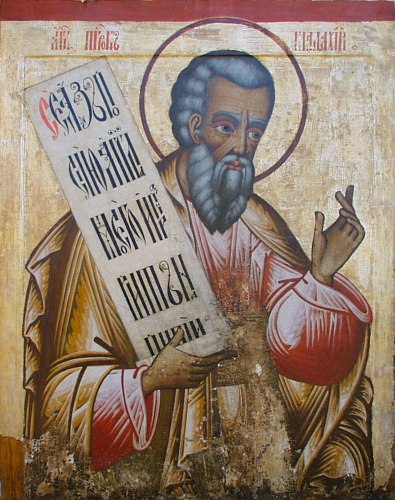
This sermon actually began with a general introduction to who the Prophet Elisha was, and what his connection with Elijah was, but it got cut in half in the recording, and so this recording begins just after that introduction.