Tuesday, February 08, 2005

How Christians Began the End of Slavery


Thomas Sowell writes about the Christian origins of the Abolitionist movement.

This is a topic I've been meaning to post on. Jesse Jackson has of late been pontificating about the difference between "progressive" Christianity and "conservative" Christianity, and attempted to suggest that conservative Christians defended slavery, while the liberals opposed it... that conservatives don't care about feeding the poor, while liberals do, etc. The reality is that he is imposing an anachronistic distinction upon the past. It was only in the early 1900's that a serious divergence began to manifest itself between those advocating a "Social Gospel" and those just advocating the Gospel. And it was only after this that we began to see the beginings of what is commonly known as "liberal" Christianity.

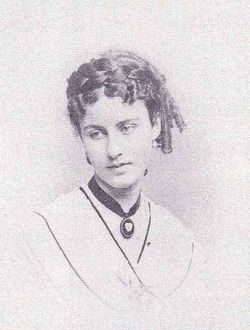
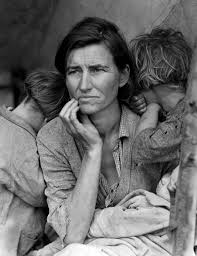
Abolitionists, such as Charles Finney, were not liberals who denied the virgin birth, or the bodily resurrection of Christ in favor of the "Social Gospel".


Charles Finney


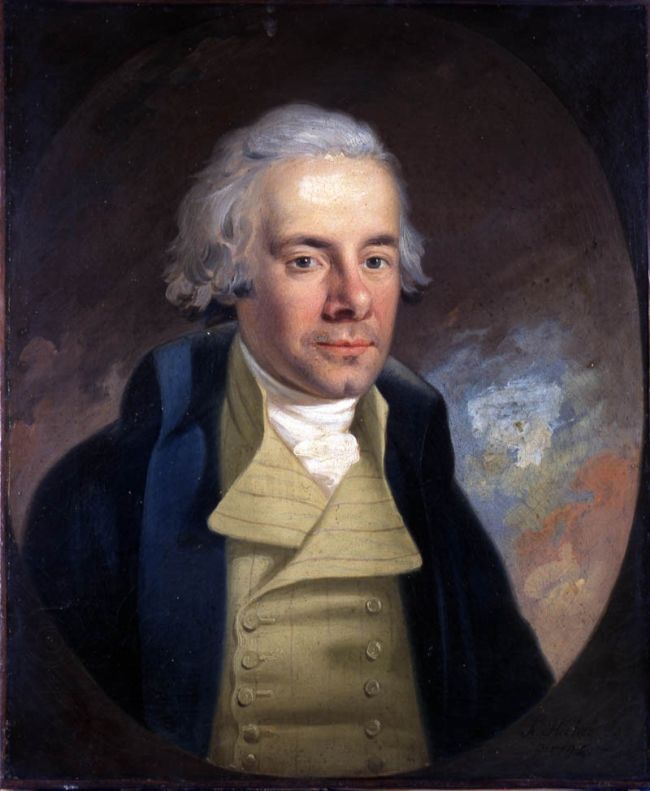
William Wilberforce became a fervent Christian, before he became a fervent abolitionists, and dedicated his life to ended it in the British Empire (which finally happened one month after his death).


William Wilberforce


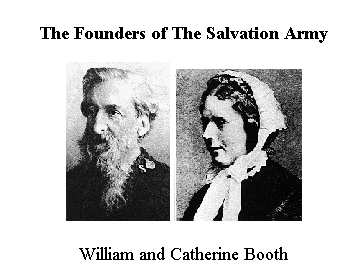
The Salvation Army was not founded by liberals who denied the deity of Christ, but by people who earnestly believed in the need for people to be transformed spiritualy by the Gospel.


It was not a denial of the teachings of the Orthodox Church that inspired Tsar Alexander II to abolish serfdom in Russia (before Lincoln freed a single slave in America), but his embrace of those teachings that led him to do this.


Tsar Alexander II


In the end, it is only the power of sincere Faith in God that has historically led to people voluntarily giving up power over the weak, and choosing mercy and justice over selfish interest. This requires a change in heart, and a mushy Christianity has historically failed to inspire people to even go to Church, much less to do anything really hard.

See also:

Stump the Priest: What about Slavery in the Bible?

Uncle Tom was no "Uncle Tom"

Monday, February 07, 2005

Beslan Massacre Mastermind... traumatized by what happened


Basayev... traumatized, but says he will do it again


One has to wonder at the nonsense that is reported with a straight face these days by members of the mainstream media. Consider the following from the Times Online, written by a certain Nick Sturdee.

“THE Chechen rebel leader who masterminded the Beslan school siege last autumn plans more such operations, despite his apparent remorse over the deaths of more than 330 people — half of them children — in the North Ossetia attack. In his first interview since that bloodbath, Shamil Basayev says that he is in a state of shock over what happened, but blames the Russians for precipitating the bloody end of the siege.”

So Basayev has “apparent remorse” and is so traumatized by what happened that he is “in a state of shock”, but it is all the Russians fault for how it ended? Let’s consider how the Beslan massacre progressed:

“Other survivors told how screaming teenage girls were dragged into rooms adjoining the gymnasium where they were being held and raped by their Chechen captors who chillingly made a video film of their appalling exploits. They said children were forced to drink their own urine and eat the petals off the flowers they had brought their teachers after nearly three days without food or water in the stifling hot gym.

… “One of them is a child, just 18 months old, with many knife wounds," …The Chechen terrorists - including two so-called "Black Widows" - had been meticulously planning the hostage-taking for months.High explosives and ammunition had been smuggled into the building during the summer by rebels disguised as workmen. A shocking account of the siege has come from Indira Dzetskelova, the mother of 12-year-old Dzerase who was guarded by two women suicide bombers during the siege. She said: "On the first day they shot a man before my daughter's eyes. They frightened the kids by saying that water in the tap was poisoned. "The famished children had to eat rose petals from bouquets which they specially bought for their teachers to mark the first day of term. Parents who were also captured had to feed their kids with all the window plants. "After they ate all the petals, my daughter said that she started to nibble the rose plants.

"She told me that several 15-year-old girls were raped by terrorists. She heard their terrible cries and screams when those monsters took them away."

…"I saw kids and women falling to the ground. And I saw that vermin's face. I saw his smile as he killed my friends."

…"All the kids were crying, 'Please don't shoot! Please don't kill us'. But the rebels did not listen to us.

"Then I saw an open window and just jumped out. My little sister Lena was left inside there." And sobbing, she added: "I don't know if she's alive. She was only ten."


One girl was so thirsty that when she had the opportunity to run to safety, she ran instead to a water fountain. She was shot in the back as she tried to take a drink.

What brave warriors... at least brave in the face of starving thirsty little girls, and unarmed civilians.


Mind you, Basayev is so traumatized remorseful that he has been in shock, but Nick Sturdee goes on to tell us that Basayev also says: “We are planning more Beslan-type operations in the future because we are forced to do so.”

Hopefully, someone will prevent Mr. Basayev from being further traumatized by another Belsan.

Sunday, February 06, 2005

Blessed Xenia


I ran across an article in the Russian press which took note of the fact that today is also the commemoration of Blessed Xenia of Petersburg.

You can read a more detailed account of her life here. This is a briefer account that was published in Orthodox America:

We know almost nothing about the early years of Blessed Xenia's life. She was happily married to a colonel who was a court singer in St. Petersburg, Russia's capital city at that time, and we can assume that her' own family was among the well-to-do. She was only 26 years old when her husband suddenly died at a drinking party. Xenia loved her husband very much and his unexpected death came as a great shock, It completely changed her way of looking at life. Knowing that her husband had not prepared himself for death and that he had died without the prayers of the Church, she began to be very concerned about the eternal state of his soul. It was as though she were given new eyes; she thought no more about parties, about having fun with friends; she gave away her possessions to the poor. In fact, she broke all ties with the world--to such an extent that even her relatives thought she must be crazy. Xenia dressed in her husband's clothes and insisted on being called by her husband's name, Andrew, as if to say that she had died, not he. And indeed, she died to the world in order to be closer to God.

At night she would go into a field outside the city and stand for hours in prayer, even in the snow. Or she would secretly help in the building of the Smolensk cemetery church carrying to the top bricks which would be waiting for the workmen in the morning. Often. as she walked the streets in the city's poorer neighborhoods, people made fun of her, children would throw dirt at her and laugh. The blessed one only prayed for their souls, bearing patiently their taunts for the sake of Christ.


Blessed Xenia would help build Churches at night time, while everyone else was sleeping


Gradually, however, people began to see that behind her seemingly odd behavior was someone who was very special in the eyes of God. They noticed that when she would hold a crying baby in her arms, the baby would at once quiet down and remain calm and content for the rest of the day. Those stores which she entered would have good business that day. People began to realize that her often strange words held a deeper meaning, sometimes warning them of approaching disasters, or of what was to happen in their life. Once, for example, she went to visit her friends the Golubevs as they were preparing to sit down for a cup of coffee. "Oh my beauty," she said to the daughter, "here you are making coffee, while your husband is burying his wife at Ochta. Run quickly!" The young girl and her mother were most puzzled by these words, but knowing Xenia' s gift of being able to see the future, they obeyed at once. There they came upon the funeral procession of the wife of a young doctor who was so overcome by grief that he fainted.

The Golubevs brought him back to his senses, became acquainted, and a year later the daughter became his wife, just as the blessed one had foretold.

Another time some merchants were selling some particularly delicious honey out of a barrel. People had already begun to buy it at a high price when suddenly Blessed Xenia appeared. "Don't take it, don't take it," she cried. "This honey can't be eaten; it stinks of a corpse." She leaned with all her strength against the barrel which overturned on the sidewalk, spilling the honey to the merchants' great dismay. To everyone's horror, there at the bottom of the barrel was a huge dead rat. Even those who had already bought some of the honey had to throw it out.

St. Xenia lived in this way for for years after the death of her husband. Exactly when she died is not known, but it was probably in the last years of the 18th century. She was buried in the Smolensk cemetery, not far from the church which she had helped to build. Later a chapel was built over her grave, and to this very day many people come there to pray to St. Xenia who, even after death continues to work many miracles, helping people out of all kinds of misfortunes. Through her prayers, people have been healed of serious illnesses; she is especially quick in helping to find jobs or places to live. Just this year a woman in England was looking for a place to live near the church where she had recently been received into the Orthodox Faith, so as to be able to attend the daily services. She and her priest prayed to St. Xenia and within a few days she had an apartment in the house next door to the Parish House! Wondrous is God in His saints.

May we learn from the example of Blessed Xenia how important it is for us not to be attached to the things of the world, but to keep our minds and hearts turned towards heaven, our true home, that we too, like St. Xenia, may, after our earthly wandering, “come to dwell in the Father's house.”


The Chapel in which Blessed Xenia is buried. A popular place of pilgrimage in St. Petersburg, Russia

Saturday, February 05, 2005

How an Orthodox Monk Saved the Life of the Young King Hussein


2005.02.04 HNA:
An Orthodox Christian Monk saved the life of a Muslim Prince


In 1951 Father Theodosios Makkos saved the life of Prince Hussein who later became king of Jordan. Father Theodosios was born in Smyrna, Asia Minor, present day Turkey, on July 11, 1913. He became an orphan at an early age and was reared by his grandmother and aunt. He had a burning desire to become a monk and serve the Church in the Holy Land. He came to Palestine in 1928 and remained there until his death, 1991 at the age of 78 years old. He served the Church of Jerusalem with great devotion at various places and positions for 63 years. His last 50 years he was the spiritual father and resident priest at the monastery for women, Saints Mary and
Martha, sisters of Lazarus in Bethany, a suburb of Jerusalem.

While in Palestine he befriended King Abdullah. In July 1951 the king made a pilgrimage to the holy shrine of Omar at Jerusalem with his grandson Prince Hussein. The prince was a very young man at that time. While in Jerusalem King Abdullah was assassinated. Father Theodosios was present, accompanying the king. He immediately took the young prince under his cassock (Rasson) and brought him to the Greek Orthodox Patriarchate of Jerusalem. The prince was hidden there. Fr. Theodosios reported the Patriarch about the tragedy of the assassination of King Abdullah and was greatly concerned for the safety and life of the young prince. The Patriarch, before the rebels cut off the phones, placed a call to the Jordanian authorities that the young prince is alive and hidden in a safe place in the Orthodox Patriarchate. The Jordanian government sent appropriate officials to the Patriarchate and took the young prince under the protection of Jordan. For that reason King Hussein always was indebted to the Elder Theodosios for saving his life. He visited often the simple monk Theodosios in his monastery in Bethany. When later the prince became king he continued to have close relations and visit him at the monastery and Fr. Theodosios had an easy access to the king's palace. Fr. Theodosios was able to enter the palace at any time. He helped numerous people through his good word to the king. The king requested the Patriarch to elevate him to the Episcopate.

Elder Theodosios was elected by the synod three times to be elevated but he refused the honor. He chose to remain a simple monk to serve the nuns at the monastery of Martha and Mary. He was well known throughout the region for his love and charity for all people without regard of religion or race. He loved all people without distinction and dedicated to charity and the service of justice. When I was in Jerusalem for the month of January 1986 on a mission of study and dialogue with Jews and Muslims I had the honor to meet Fr. Theodosios. I visited him in the monastery and he told me the story. He also told me that whenever the king greeted him as a sign of respect the king opened his palm for him to kiss, whereas the other people kissed the back of his hand. This is a remarkable story of friendship of a simple monk and a king, a Greek Orthodox Christian and the other a Muslim. Father Theodosios dedicated his entire life to protect the shrines and people who live in Palestine that he loved so much. Especially he was honored for saving the life of the future king from certain death. This is a great example for all people to follow, that is, to love all and protect the life of all regardless of religious affiliation, nationality or race. All people are people of God created in His image.

I was blessed to have known the Blessed Elder Theodosios. All must emulate his example of love and respect for the other.

Rev. Dr. Protopresbyter Professor George C. Papademetriou, Hellenic
College/ Holy Cross Greek Orthodox School of Theology

"It was total cruelty."


Bolsheviks turned priests into columns of ice (December 1995)
MOSCOW (Reuter) - A Russian presidential commission has announced that 200,000 clergy were systematically murdered under Soviet rule in a horrific cycle of crucifixions, scalpings and "bestial tortures." Commission chairman Alexander Yakovlev, presenting the report at a news conference, seemed unconcerned that it might deter electors from voting communist or nationalist in parliamentary elections on December 17.

"If it has an influence, I will be very satisfied," he said.

The report by the Commission for the Rehabilitation of the Victims of Political Repression also found that another 500,000 religious figures suffered persecution in the decades after Vladimir lenin's Bolsheviks seized power.

"documents relate how clergymen, monks, nuns were crucified on royal gates and shot in the basements of the Cheka (secret police), scalped, strangled, drowned and submitted to other bestial tortures," he said.

...I was especially shocked by accounts of priest turned into columns of ice in winter...But that's not all, there were crucifixions...It was total cruelty.

He said hundreds of people were shot for not giving up church property, and only a fraction of the proceeds were spent on the poor as the authorities had promised.

...He said that of the 48,000 churches in Russia before the 1917 revolution, only 7000 remained by 1969... "It's a tragic story which has not provoked repentance and which has not been properly heard," said Mr. Yakovlev.


Thursday, February 03, 2005

The Day They Began Killing Christians

Lifting his arms to heaven, Metropolitan Vladimir prayed aloud:
"O Lord, forgive my sins, voluntary and involuntary, and accept my spirit in peace."
Then he blessed the murderers with both hands and said:
"My God bless and forgive you."
In the silent night four shots were heard, then two more, then more...

The Hieromartyr Vladimir of Kiev, February 7th, 1918 n.s.


On this coming Sunday, the Russian Orthodox Church celebrates the memory of the New Martyrs and Confessors of Russia, who were slain by the Communists. The reason why this particular Sunday was chosen, was because this is the nearest Sunday to the day upon which the first Martyr of the Communist Yoke was slain (January 25th on the Old Calendar, February 7th on the civil calendar).

It is perhaps not a coincidence that this martyr was Metropolitan Vladimir of Kiev, who bore the name of St. Vladimir the Great, who enlightened the Russian land with the Christian faith; and who was the Metropolitan of Kiev, the mother city of Russia which saw the baptism of Rus' in 988 a.d. This was the begining of a new baptism of Rus', and through the faith and prayers of the New Martyrs we are now begining to see a rebirth of Orthodox Christianity in Russia.

It is especially moving to read about the reaction of the faithful, who all their lives had read about the martyrs of the past, but who for the first time saw one in the flesh. This would be only the first of millions slain by the Communists for refusing to bow the knee to the state, rather than to God.

Here is the account of his murder at the hands of the Communists:


Artillery shells began to fall on the Kiev Caves Lavra on January 15 and continued for several days. However, the metropolitan continued with his religious duties, displaying great calm, and on January 23 celebrated his last Divine Liturgy with the brotherhood of the Lavra. On the evening of January 23 the Bolsheviks broke into the Lavra, committing unparalleled acts of sacrilege and looting, mocking and whipping the monks and killing the officers and other military personnel who were there. In spite of all the commotion, the metropolitan served an akathist to the Dormition of the Mother of God in the great church of the Lavra, which proved to be his last service on earth. Then he and Bishop Theodore of Priluki moved to the altar of the lower church, which was dedicated to St. Michael, first metropolitan of Kiev.

The night of January 25 was full of alarm. Four armed men and a woman, dressed as a Red Cross nurse, broke into the quarters of the superior, made a thorough search and took everything of value. In the middle of the night, three of them went out "for reconnaissance" and robbed the treasurer and the provost. Later, three armed Reds searched the metropolitan's rooms and, being unable to find any valuables, carried away a golden medal from the safe.

At half past six in the evening, the doorbell rang loudly three times. Five men, dressed in soldiers' uniforms and led by a sailor, entered the house and asked for "Vladimir, the Metropolitan". They were directed downstairs to the cell of the archpastor. The metropolitan came out to meet them, and was taken into the bedroom where they remained for twenty minutes behind locked doors. There Metropolitan Vladimir was tortured and choked with the chain of his cross, insulted and ordered to give them money. Later, the attendants found on the floor of the room pieces of a broken chain, a silk cord, a tiny case with holy relics and a small icon which the metropolitan always wore around his neck.

When the metropolitan came out twenty minutes later, surrounded by his torturers, he was wearing his cassock, a panagia and a white klobuk on his head. On the front steps he was approached by his old cell-attendant, Philip, who asked for a blessing. The sailor pushed him aside, shouting:

"Stop showing respect to these bloodsuckers. Enough of that!"

The metropolitan went up to Philip, blessed and kissed him, and, shaking his hand, said:

"Goodbye, Philip."

Then he wiped away his tears. Philip later reported that when they parted the metropolitan was calm and solemn, as if leaving for church to celebrate the Holy Liturgy.

This old, humble and innocent servant of God went to his death without any sign of weakness or fear. As he was led out of the monastery he crossed himself and softly chanted a prayer.

An eyewitness relates that Metropolitan Vladimir was driven from the gates of the monastery to the place of execution. On his way from the car to a small clearing by the fortified wall, he asked:

"Is it here that you want to shoot me?"

One of the murderers answered:

"Why not? Do you expect us to stand on ceremony with you?"

When the metropolitan asked for permission to pray before he was shot, the reply was:

"Be quick about it!"

Lifting his arms to heaven, Metropolitan Vladimir prayed aloud:

"O Lord, forgive my sins, voluntary and involuntary, and accept my spirit in peace."

Then he blessed the murderers with both hands and said:

"My God bless and forgive you."

In the silent night four shots were heard, then two more, then more...

"They are shooting the metropolitan," said one of the monks at the Lavra.

"There are too many shots for one murder," replied another.

At the sound of the shots, some fifteen sailors with revolvers and lanterns ran into the yard of the monastery. One of them asked:

"Did they take the metropolitan away?"

"They led him out of the gates," replied the monks timidly.

The sailors ran out, and in about twenty minutes returned.

"Yes, we have found him," they said, "and we'll take every one of you out in the same way."

There is another account of the metropolitan's death. Archimandrite Nicanor Troitsky recalls that when he was a boy his mother hurried with him to the Lavra, where a ring of soldiers were holding a crowd back from the scene of the execution. He recalls that the metropolitan was given a series of questions, and each time he gave an (unsatisfactory) answer a bayonet was thrust into his body until he became a fountain of blood. After the execution the crowd burst through the cordon of soldiers. Then Fr. Nicanor's mother told him to put his fingers into the blood of the martyred metropolitan, make the sign of the cross with them on his forehead, and remember that he had witnessed the death of a true martyr, to whose confession he must remain faithful for the rest of his life...

The silence was not broken again that night. The monastery slept, and no one seemed to realize that only a thousand feet from the northern gates of the Lavra, in a pool of blood, lay the shattered body of the holy metropolitan.

At sunrise, some women pilgrims appeared at the Lavra gates, and the monks learned from them where the mutilated body of the metropolitan was to be found. The brotherhood decided to bring the body into the monastery, for which permission from the communist authorities was obtained. At nine o'clock, Archimandrite Anthimus, accompanied by four medical orderlies, went to the scene of the murder.

The metropolitan was lying on his back covered with an overcoat. Missing were his panagia, his klobuk and cross, galoshes, boots, socks, gold watch and chain. The autopsy showed that he had been shot with exploding bullets and stabbed in several places with cold, sharp weapons. His hands were frozen in the position of blessing.

After serving a litiya at the spot where the metropolitan had died, they laid the body on the stretcher and, at about eleven o'clock in the morning, they brought it into the church of St. Michael, where the murdered metropolitan had spent the last few hours of his life. As Archimandrite Anthimus was lifting the body, he was surrounded by about ten armed men who started to mock and insult the remains.

"You want to bury him! But he deserves to be thrown into the ditch! You intend to make holy relics of him, that's why you are picking him up!" they shouted.

As the mournful procession was making its way to the Lavra, pious women who were passing by wept and prayed, saying:

"The sufferer and holy martyr, may God's Kingdom be his!"

"A heavenly kingdom! His place is in hell, at the very bottom of it," replied the fanatics.

After the metropolitan's body had been photographed and dressed in the proper vestments, the deputy abbot of the Lavra, Archimandrite Clement, and the senior brethren of the monastery served a panikhida. On January 27, Metropolitan Platon of Tbilisi, who was representing the Russian Patriarchate at the Ukrainian Council, served a panikhida for the metropolitan in Kiev. On January 29, the body was transferred to the Great Church of the Kiev Caves Lavra, and after the burial service it was buried in the church of the Elevation of the Cross in the Near Caves.

On February 15/28, 1918, a session of the Russian Church Council meeting in Moscow was dedicated to the memory of the murdered metropolitan.

Metropolitan Vladimir was the hierarch who bore the brunt of the first revolutionary assault on the Russian Church. It was therefore fitting that he should become her first hierarchical new martyr. And on April 5/18 the Russian Council decreed that the Sunday nearest the date of his martyrdom, January 25 / February 7, should become the date of the annual commemoration of all the holy new martyrs and confessors of Russia.



Saturday, January 29, 2005

The Truth about Planned Parenthood


Margaret Sanger, founder of Planned Parenthood

"Birth Control which has been criticized as negative and destructive, is really the greatest and most truly eugenic method, and its adoption as part of the program of Eugenics would immediately give a concrete and realistic power to that science. . . as the most constructive and necessary of the means to racial health." -Margaret Sanger, The Pivot of Civilization. Brentano's Press, NY, 1922, p 189.


I stumbled across an old commentary by Joseph Farah on Planned Parenthood, which talks about current issues, as well as their historically racist and eugenicist past.

Most people assume Planned Parenthood is a harmless institution, but it is the number one provider of abortions in America, and it's affiliate organization in China practices forced abortions. So much for "My body -- my choice!"

For more, see this article on Planned Parenthood from Blackgenocide.org.

Thursday, January 27, 2005

Abba Arsenius: "Don't go there!"


St. Arsenius


Saint Arsenios the Great was a highly educated man of his day (born in 354, in Rome), and a master of rhetoric, philosophy, and of both Latin and Greek, but he gave it all up to serve the Church. Despite this, the Emperor sought to have him instruct his children, because his learning was of such a high reputation. He was very reluctant to do so, but agreed to do it in obedience to Pope Damasus. He devoted all his energy to fullfilling this task, but was troubled because of the high esteem in which he was held. He yearned for the quite life, and sought God's guidance in prayer. He heard a voice telling him "Arsenius, flee from men, and you shall be saved." And then, removing his rich clothing and replacing it with old and tattered garments, he secretly left the palace, boarded a ship for Alexandria, and he made his way to Sketis, a monastery in the midst of the desert.

Many of his sayings are Preserved in the Sayings of the Desert Fathers, and very often one gets a glimpse of how much he shunned fame, and desired solitude. On of my favorite sayings of his is as follows:

"Blessed Archbishop Theophilus, accompanied by a magistrate, came one day to find Abba Arsenius. He questioned the old man, to hear a word from him. After a short silence the old man answered him, "Will you put into practice what I say to you?" They promised him this. "If you hear Arsenius is anywhere, do not go there" (The Sayings of the Desert Fathers, p. 10)

Another great saying of his is:

"One day Abba Arsenius consulted an old Egyptian monk about his own thoughts. Someone noticed this and said to him, "Abba Arsenius, how is it that you with such a good Latin and Greek education, ask this peasant about your thoughts?" He replied, "I have indeed been taught Latin and Greek, but I do not know even the alphabet of this peasant" (Ibid., p. 10)

Wednesday, January 19, 2005

Sam Houston on the Civil War


 Some of you laugh to scorn the idea of bloodshed as the result of secession, but let me tell you what is coming....Your fathers and husbands, your sons and brothers, will be herded at the point of the bayonet....You may after the sacrifice of countless millions of treasure and hundreds of thousands of lives, as a bare possibility, win Southern independence...but I doubt it. I tell you that, while I believe with you in the doctrine of state rights, the North is determined to preserve this Union. They are not a fiery, impulsive people as you are, for they live in colder climates. But when they begin to move in a given direction...they move with the steady momentum and perseverance of a mighty avalanche; and what I fear is, they will overwhelm the South. -- Sam Houston, Speech in Galveston, 1861

Sam Houston was the general who won the Texas Revolution, the first President of the Republic of Texas, the first governor of the State of Texas, but he was removed from office for refusing to take the oath of loyalty to the Confederacy, and died during the war, under somewhat sadder circumstances than he should have.

Robert E. Lee comments on the results of the Civil War


"The South has contended only for the supremacy of the Constitution, and the just administration of the laws made in pursuance to it. Virginia to the last made great efforts to save the union, and urged harmony and compromise.... Although the South would have preferred any honourable compromise to the fratricidal war which has taken place, she now accepts in good faith its constitutional results, and receives without reserve the amendment which has already been made to the Constitution for the extinction of slavery. That is an event that has been long sought, though in a different way, and by none has it been more earnestly desired than by citizens of Virginia."


Today being Robert E. Lee's birthday, the Washington Times has reprinted a letter from Robert E. Lee, written in 1866 to an Englishman who asked for his reflections on the results of the Civil War. Thanks to the Southern Appeal for the Link.

Today is a state holiday in Texas, which works out great for me, because today is also an Orthodox holiday... the Feast of Theophany (aka Epiphany).

So thanks to Robert E. Lee, I don't have to take leave to celebrate this wonderful feast. :)

Theophany is the feast of the Baptism of the Lord, and the beginning of his public ministry. In the west, it is also known as Three Kings Day. For those wondering why it is celebrated on January 6th by those in the west, and today by those on the Julian Calendar, you can read this post.

Saturday, January 15, 2005

Uncle Tom was no "Uncle Tom"

"Yes, Mas'r," said Tom, putting up his hand, to wipe the blood, that trickled down his face. "I'm willin' to work, night and day, and work while there's life and breath in me; but this yer thing I can't feel it right to do; - and, Mas'r, I never shall do it, - never!"


I just finished reading “Uncle Tom’s Cabin”, which I began reading because of my interest in the Civil War. It is unfortunate that this book, which has probably had the single greatest impact on American history of any book ever written, outside of the Bible, is not a text that every high school graduate has read and studied. It is also unfortunate that the key figure in this book has become a name of derision. Uncle Tom was not a submissive wimp, but was an image of Christ. He endured all manner of abuse that was heaped upon him, but willingly died to save others, by refusing to be complicit in evil.

It is fascinating to read a book that is earnestly trying to convince the reader of facts that are taken for granted now, but which were quite controversial at the time. This book sought to expose the evils of slavery to both North and South, and it did so by focusing not just on the obvious examples of evil, but by showing how even well intentioned people who thought that they were treating their slaves well could not guarantee that their slaves would not end up in the hands of evil men, due to unforeseen turns of event, such as the accumulation of debts or unexpected death.

There are two particularly moving scenes in this book:

There is the escape of Eliza, a beautiful slave with an infant, who due to the debts of her owners was sold to a man who thought she would fetch a high price at auction in New Orleans. Her owners had raised her in Kentucky, and had in many ways treated her like a daughter, but when faced with the choice between financial ruin and the sale of some of their slaves, chose to latter option. Slaves in border states generally were treated better, because it was easier for them to escape, but there was always the threat of being “sold down the river” to New Orleans, where they would wind up on a plantation in the deep south, where being worked to death was not an uncommon experience… or, if they were women of beauty, they might be sold into a life of shame. In any case, Eliza knew she would be separated from her husband, and likely separated from her baby. She chose to run, and in a scene that reminds one of the crossing at the Red Sea, she crosses the Ohio river by skipping across on ice patches. This incident was patterned on a true story, as are most of the incidents in this novel.


The trader caught a full glimpse of her just as she was disappearing down the bank; and throwing himself from his horse, and calling loudly on Sam and Andy, he was after her like a hound after a deer. In that dizzy moment her feet to her scarce seemed to touch the ground, and a moment brought her to the water's edge. Right on behind they came; and, nerved with strength such as God gives only to the desperate, with one wild cry and flying leap, she vaulted sheer over the turbid current by the shore, on to the raft of ice beyond. It was a desperate leap - impossible to anything but madness and despair; and Haley, Sam, and Andy, instinctively cried out, and lifted up their hands, as she did it. The huge green fragment of ice on which she alighted pitched and creaked as her weight came on it, but she staid there not a moment. With wild cries and desperate energy she leaped to another and still another cake; stumbling - leaping - slipping - springing upwards again! Her shoes are gone - her stockings cut from her feet - while blood marked every step; but she saw nothing, felt nothing, till dimly, as in a dream, she saw the Ohio side, and a man helping her up the bank.


Then there is the scene in which Tom is beaten to death by Simon Legree, for refusing to tell what he knows about two escaped slave women.


An't I yer master? Didn't I pay down twelve hundred dollars, cash, for all there is inside yer old cussed black shell? An't yer mine, now, body and soul?" he said, giving Tom a violent kick with his heavy boot; "tell me!"

In the very depth of physical suffering, bowed by brutal oppression, this question shot a gleam of joy and triumph through Tom's soul. He suddenly stretched himself up, and, looking earnestly to heaven, while the tears and blood that flowed down his face mingled, he exclaimed,

"No! no! no! my soul an't yours, Mas'r! You haven't bought it, - ye can't buy it! It's been bought and paid for, by one that is able to keep it; - no matter, no matter, you can't harm me!"


After reading this book it is easy to see how it was credited with starting the Civil War. It certainly brought the issue of slavery home, by causing people who had generally not thought deeply about it (since, after all, slavery had been the way of the world in every part of the globe since the fall of Adam) to see slavery from the vantage point of the slave, and to imagine what it must be like to see ones daughter bought by a scummy man who clearly had dishonorable intentions, to be separated from ones wife, or to face the uncertainty of a slave auction themselves.

What is most striking about this book is what a thoroughly Christian book it is. This book if full of Christian imagery, and sought to appeal to the Christian faith of its readers. This may explain why the book itself is generally not taught in public schools today. What a shame.

Friday, January 14, 2005

Before Rosa Parks refused to go the back of the bus...

...Mary Custis Lee refused to go to the front of the train.


I just ran across this forgotten historical tidbit. Robert E. Lee's daughter, Mary Custis Lee, was arrested for violating the Jim Crow laws, because she insisted on sitting in the car reserved for black folks.

This reminds me of a story about her father, which shows where she got it from:

One Sunday at St. Paul's Episcopal Church in Richmond, a well-dressed, lone black man, whom no one in the community—white or black—had ever seen before, had attended the service, sitting unnoticed in the last pew.

Just before communion was to be distributed, he rose and proudly walked down the center aisle through the middle of the church where all could see him and approached the communion rail, where he knelt. The priest and the congregation were completely aghast and in total shock.

No one knew what to do…except General Lee. He went to the communion rail and knelt beside the black man and they received communion together—and then a steady flow of other church members followed the example he had set.

After the service was over, the black man was never to be seen in Richmond again. It was as if he had been sent down from a higher place purposefully for that particular occasion.


The Lees were a more complex family than is often assumed to be the case.

Tuesday, January 11, 2005

Let them eat Spam (What's Wrong With Welfare, Part II)


This is Part II of a series. Click here to read Part I.

There are a number of practical issues about how Food Stamps, TANF, and Medicaid are being administered, that I will begin to deal with in my next post, but before I get to all of those issues, I wanted to spend a bit of time on some theoretical questions that I think are important to think about… however, I am too much of a pragmatist to think that much will come of my comments on these issues, because they would involve revolutionary changes to the current system. I am more optimistic about suggestions regarding how best to administer the current system, than I am that what I say here will result in a fundamental overhaul of the system. But in any case… here it goes:

I. Should the government be involved in these programs to begin with?

As a Christian, I believe that it is primarily the responsibility of believers to help meet the needs of the poor, and I do believe that private charities do a better job of actually helping the poor when comparing the bang we get from private charitable dollars compared to equivalent government dollars. Government welfare programs can be dehumanizing and (as we have often seen historically) can result in creating more long term social harm than good.

One big problem with government entitlements is that people feel entitled to them. There is no gratitude to faceless government bureaucracies from those who receive benefits from them, and those bureaucracies are not able to evaluate particular cases based on intangible factors such as whether or not the person requesting help is doing all they can to improve their own situations, or whether that person is engaging in behavior that only worsens their situation (such as continuing to have illegitimate children from absent fathers who have no intention of providing any support to their offspring). A bureaucracy can only establish eligibility criteria that try to identify those who are needy, and if a person who is pregnant with her fifth illegitimate child is applying for benefits, she can be treated no differently than a woman who has five legitimate children from a husband she had every reason to believe would always be there to support her, but has unexpectedly left her.

I once interviewed a man who was applying for assistance, whose wife had just run out on him and his daughter, who had just been laid off his job, and had a car note and a house note that was more than his unemployment benefits. He was ineligible because his relatively new car put him over the resource limit. Now, in Houston, you cannot practically work without a car, and suggesting to this man that he should sell his car and live off that money until it ran out, and then come back to reapply would have been the most counter-productive course of action possible. Telling this man that he was not eligible for Food Stamps or TANF was one of the most gut wrenching things I ever had to do as a case worker. He was in a desperate situation, and the look on his face was like the look of Job, after the third messenger had shared the bad news of the day to him. On the other hand, I have had cases in which people were clearly milking the system for all it was worth, and I had no choice but to continue the flow of the milk, because on paper, they were more needy than the guy I had to deny, although any objective observer would have known better. Many welfare recipients have adjusted their lifestyle to receive the maximum benefits, and when all the government benefits are tallied, they actually do quite nicely for themselves, though they must engage in soul destroying behaviors that destroy their lives and the lives of their children. All too often, we end up subsidizing irresponsibility and dysfunctionality.

My grandmother lived before the Great Society, and she was pregnant at age 15 with my mother, during the great depression, was unmarried, and after being kicked out by her family, she was homeless. Had she been born 40 years later, she would no doubt have entered a generational cycle of dysfunction that would not only have imprisoned her in a dehumanizing system, but her descendants as well… myself included (that is, of course, assuming that she would not have just aborted my mother). Instead, she had my mother at a Salvation Army hospital, was helped back onto her feet, married a good man, had several more children, and became a productive tax-paying citizen. And she always felt a debt of gratitude to the Salvation Army.

Government handouts are dehumanizing because instead of another human being showing their love, and helping out a person by meeting their need, showing them how to improve their situation, and holding them accountable; you have a faceless bureaucracy, with forms and rules, no love, and (all too often) no common sense. The Salvation Army could tell my Grandmother that she had sinned, but that God loved her, wanted to forgive her, and wanted her to live a better life. A Bureaucrat cannot make “value judgments” about the “life-styles” of the people who apply for benefits – he can only put their information into the computer, and see if the computer says they are eligible, and if so, for how much. There is something redemptive about a person giving someone else help, when the person receiving it knows that the help is not owed… that they are not “entitled” to it, but that the person is helping them because they love them. This kind of help inspires the receiver, and blesses the giver. But unfortunately, this is the difference between charity (which is the Latin equivalent to the Greek word “agape” and refers to the kind of love that comes from God) and welfare.

All that having been said, in the Great Depression, private charities were unable to meet all of the needs, and so the government began stepping in. I think it is highly unlikely that the government will cease to play a roll in these areas, and so do not think it is worth expending a lot of energy trying to change that reality. If we ended all government programs tomorrow, we would start creating new ones the first time we saw old people eating dog food, or kids living under bridges with their mother. I think the best we can hope for is that the government will try to play its roll in a more constructive way.

II. Should the TANF and Food Stamp Programs be done away with?

During the Great Depression, the government did help people in need, but it did so in ways that encouraged work and discouraged people from receiving this help any longer than they needed it. For example, they had work programs, in which people built roads, bridges, and Government Buildings, rather than simply handing out free money. The people who participated in this program had the dignity of hard work, they could take the money they earned with pride, and yet the money was not so good that they would want to keep these jobs any longer than they had to.

They also had a commodities program, in which the government gave surplus food to people who were hungry. One of these commodities was Spam. Now today, people think of e-mail when their hear the word Spam, but Spam is a food, which if you grew up eating it, you understand why the name came to be applied to unwanted junk mail, that comes in large quantities. Before microwaves, it was a quick and cheap meal. My father, who grew up during the Great Depression, could not stand the smell of it, because he had eaten enough of it to last a life time. These commodities kept people from starving, but there was no incentive to stay on that program any longer than necessary.

The problem with the Food Stamps is that it is too generous and too convenient. A family of four on food stamps, can receive about 400 dollars a month in Food Stamps (not to mention WIC, with which they can also buy dairy products), and with those stamps they can buy the choicest foods that one can find in a modern grocery store. What incentive do they have to get off this program? None. Now, for those who are elderly or disabled, I think the Food Stamps program is a good thing… the only problem is that these people often get very little in Food Stamps because their Social Security checks are counted against them. But for people who are able-bodied, I think we would better help them in the long run by giving them basic government commodities that would feed them, but not quite so thoroughly satisfy them as Food Stamps do.

There are food banks all over the country that already do something like this, and what is interesting is that I have often had people complain that their food stamp case was not being certified quickly enough, and that their kids would be eating dinner out trash cans, only to be told, when I referred them to a food bank, that they didn’t like food banks, because “They only give you can goods and bread.” Apparently the trash cans provide better fare.

My father was the hardest working man I ever knew, and I am convinced that he worked so hard all of his life in large part because he didn’t want to ever have to eat another can of Spam again. And while he never finished High School, he was making about $100 dollars an hour as an insulator when he retired, and his Spamophobia had the added benefit of him providing well for his children, and him having the dignity of having earned everything he had.

So I say, let them eat Spam. Let them eat so much of it, that they never want to smell it again. And then let them get a job, and buy their food in the grocery store the same way everyone else does… with money they have earned buy the sweat of their brow.

Sunday, January 09, 2005

Tribute to our soldiers


Click here for a moving 5 minute tribute to our troops that is well worth the look. Thanks to Sister Toldjah for the tip.

This reminded me of a 9/11 tribute from the 9/11 digital archive, that is also worth a look.

Wednesday, January 05, 2005

A Homily on the Nativity of Christ, from China


Christ is born! Glorify Him!


Click on the icon above to read a homily written by an Orthodox priest in China (Protopresbyter Michael Min), probably written not long before the Communists really set out to totally destroy the Church in China.

Tuesday, January 04, 2005

My other life... (What's Wrong With Welfare? Part I)

Yes... I lead a double life....


Well.... not quite like that. I am a mild mannered parish priest, but I am also a mild mannered supervisor for the Texas Works division of the Texas Health and Human Services Commission (which was the Texas Department of Human Services until a few months ago).

I am often told that it seems a bit contradictory for me to be a conservative Republican who works with Food Stamps, Medicaid, and TANF (aka welfare), but you would probably be surprised at how conservative people are who work with these programs. When I began working for the agency back in 1992, I expected to be surrounded by bleeding heart liberals... and I suspect that this impression comes from those who are social workers (such as those who work in Child Protective Services). The difference between social workers (what they do) and case workers (what I do) is that social workers are advocates for people who are abused, neglected, etc –- and so this job tends to attract bleeding hearts, and their experiences in that capacity reinforce their views of the poor as victims, because the people they are dealing with usually are truly victims. Case workers determine what benefits people are eligible for, and in that capacity have to examine the household circumstances, listen to the answers to our questions, and try to make everything add up so that the people we certify get what they are actually eligible for. On their side of the equation, they are dealing with people who are clearly in need. On our side of the equation, we are dealing with people who say that they are in need… and may or may not actually be. Consequently, we see a lot of fraud and abuse of the system. This is not to say that we never encounter cases that touch our hearts, because of the genuine need we see. It is very satisfying on occasion to feel that we have helped people with the kind of needs that these programs were really designed for... it’s just that these cases are more exceptional than they should be.

I intend to post more about this is coming weeks, but suffice it to say that we often help people who are really in need, and we often help people who are really not. The system is flawed, but is better now than it was 10 years ago, prior to welfare reform. Most of the people I work with are Democrats, and the majority are minorities (this is true in my office, but is not true throughout the agency), and yet despite what you might think, most supported the parts of welfare reform that actually worked... because those of us who work with these programs are the most aware of the abuses of the program, and like most tax payers, do not like to see their tax dollars wasted. Also, most of the black folks I work with are more socially conservative than the average white person... yet they almost all vote Democrat, because they have been convinced that the Democrats are on their side, and the Republicans are not -- more on this in future, too.

As one of the few openly Republican people in my office, I have tried to defend the Republicans over the years, and sway my co-workers to believe that Republicans are not all money grubbing rich people who could care less about the poor or minorities. I think over the years I have made some headway, but what the Republicans in Texas have been doing with social services in the past 3 or 4 years has made that task a lot more difficult.

In short, they are trying to privatize these programs, and contract them out to for-profit corporations. Now, I have nothing against corporations making profits, but there is no profit motive when in comes to welfare, because welfare is essentially what happens when you give people stuff for nothing –- and this is not something that for-profit corporations have a lot of experience with. If we were talking about contracting out our functions to non-profit groups, such as the Salvation Army... then I think we would have something worth considering, but that is not what is on the table. What is actually in the works is bad for the people who receive these benefits, bad for people like me who administer them, and bad for the tax payers, because it isn’t going to work, and is going to be a boondoggle that will be much are harder to fix than it was to implement.

In future posts I will discuss why privatization of this kind is a bad idea, present alternative ways to reform the system, and talk about why real welfare reform is resisted not just by the advocates of the poor, but also by many powerful business interests. I will also talk more specifically about what has been going wrong in Texas, but to start things off I will refer the reader to an article in today’s Houston Chronicle that is discussing an on-going scandal that is tied up with the push to privatize welfare.

I have been trying to meet with my Republican State Senator (Jon Lindsay) and my Republican State Representative (Debbie Riddle) for the better part of a year now, but I regret to say that I have been more or less brushed aside. I figured that if I met with them, gave them the secret Republican handshake, and told them what was really going on, they would listen. I still hope that might be true, if I ever get them interested in listening to what I have to say to begin with. I have voted for them in the past, I voted for them again in the last election, and will vote for them in the future... because I believe moral issues, such as abortion and gay marriage are far more important; however, this is not an unimportant issue, and so I hope to use this blog to get at least some people to hear what's wrong with the system, and what's wrong with the current fixes that are in the works.

Click here for Part II: Let Them Eat Spam.