Saturday, March 24, 2007

What have I been up to on OrthodoxWiki?


Someone e-mailed me in response to my previous blog post, and asked what have I been doing on Wikipedia. Most of what I have been doing has been on OrthodoxWiki.org, rather than on the main Wikipedia... although I have tweak a few articles on that one too.

Here are some of the articles I have worked on in a way that went beyond just a minor tweak:

Megalynarion

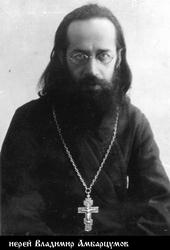
St. Jonah of Manchuria

Typika

The Midnight Office

Horologion

Liturgical Books

Gospel Book

Compline

All-Night Vigil

Lectionary

Prophetologion

Hieratikon

Archieratikon

Some of these articles I still intend to work on further, but that's what I have been doing for fun lately.

Friday, March 23, 2007

I've been Wikified

I've been a long time user of Wikipedia and its Orthodox counterpart, the Orthodox Wiki. I realize of course the limitations of using an open source encyclopedia, and I have at times been irritated by some of the misinformation I have seen in some articles on Wikipedia. Recently, Andrew Keen, commented about Wikipedia (Newsweek 3/26 p.16), that it was "no more reliable than the output of a million monkeys banging away at their typewriters." While I agree that one has to be cautious with what you read on Wikipedia, and realize that it is not on the same level as a more traditional encyclopedia, the fact remains that it is widely used... and very often, the information is quite good. One just has to learn to be discriminating, and to develop an eye for texts that are not supported by references or sufficient evidence. There is in fact a review process on Wikipedia, and generally speaking, the people who do the reviewing do know what they are talking about in the given area that they work on.

Rather than curse the occasional darkness one finds in Wikipedia articles, I have started working on editing and composing them myself. I have long been attracted to the possibilities of hyper-lined texts, as you can see in my Icon FAQ article. Footnotes are great, but being able to link to entire articles that are immediately accessible is a wonderful advantage of online articles.

I would encourage others to give it a try. It is not as difficult to do as you might think.

Sunday, March 18, 2007

We're off on the road to Moscow...


God willing, I will be going to Moscow in May of this year for the signing of the Act of Canonical Communion between the Russian Orthodox Church Abroad and the Russian Orthodox Church.

For more on why this is important, read this article.

Bitter Sweet Vindication for Carlos Guerra


From the very start of the Accenture/HHSC Privitization debacle, there has been one voice in the media that had this whole thing pegged -- Carlos Guerra of the San Antonio Express. Those who were watching things unravel from the inside had at least some consolation that someone with a voice in the main stream media "got it". I heard later that he was getting some grief at his paper, because he wrote so frequently on the subject... and then unfortunately the frequency of his commentaries on this subject declined sharply. He now has a new piece in which he get's to tell everyone he was right. I am happy for him in that respect, though it is clear that he takes no delight in the fact that so many people had to be hurt before the powers that be finally decided to change course.

This whole disaster was not only preventable, and predictable -- it was predicted by many many voices, my own included.

Here is Carlos Guerra's op ed:

Carlos Guerra: A contract that failed miserably, taking 200,000 Texas kids with it

Web Posted: 03/14/2007 11:01 PM CDT

Express-News


Having first written in May 2003 about what was coming, I wasn't surprised Tuesday morning when Will Rogers of the Texas State Employees Union wrote to say that "Accenture and (the Texas Health and Human Services Commission) will jointly announce that the contract will be 'unraveled,' with each party 'going its own way.'"

Nor did I gag when HHSC and Accenture officials tried to put a positive spin on the dissolution of possibly the nation's largest contract to privatize a state's social services safety net.

I wasn't alone.

"I hate to say that I told them so, but I did — for four years," sighed state Sen. Carlos Uresti, D-San Antonio.

It began when the 2003 Legislature faced a $10 billion budget shortfall and the ideologues in charge were intent on rolling back taxes instead of raising any. So they opted to make up the shortfall largely on the backs of Texas' most vulnerable.

House Bill 2292 was a "reform" and "modernization" of Texas' health and human services safety net, they said, and it would save Texas hundreds of millions through privatization and by being more businesslike. After all, business does everything better than government.

A close reading of 132-page HB2292 revealed the massive reorganization of Texas' social services agencies really was a convenient cover for its more nefarious provisions.

Any real savings, I wrote then, will accrue from slashing or eliminating benefits, unconscionably stiffening eligibility standards and systematically making applying for benefits so frustrating that, needs notwithstanding, people will become discouraged and quit seeking benefits.

At the heart of HB2292 was authorization for HHSC to privatize enrollment for CHIP and Medicaid, and other critical safety net programs.

But a year later, HHSC insisted $177 million would be saved by contracting for four privately run centers to take applications by phone, fax or the Internet, and the firing of 3,377 of the state's 7,864 trained field workers and the shuttering of 217 of the 381 field offices.

Bermuda-based Accenture headed the consortium awarded the $899 million call center contract. But problems surfaced early on, such as interminable hold times and operators giving applicants incorrect information. Software broke down and documents were lost, some of which were inexplicably faxed to a Seattle warehouse.

The new system's roll-out repeatedly was postponed, the call centers' workers had to be retrained, and soon after the trained state workers started getting pink slips — by e-mail, no less — many had to be rehired.

"As (House) Government Reform chair, we had Accenture and HHSC testify, and they kept saying, 'It's getting better, everything is working great'" Uresti says, "when, obviously, that wasn't the truth, or 200,000 kids wouldn't have fallen off CHIP."

And it was shrinking CHIP rolls that set off the outcry that finally has resulted in Accenture getting the boot.

But that's hardly all that has gone wrong.

"This has done more damage to Texas than you can imagine," Uresti adds. "Everyone talks about CHIP and Medicaid because they recognize them; but this has also affected our seniors, our mentally retarded, our disabled, pregnant moms and on and on and on."

And aside from the human cost, this disaster may end up costing hundreds of millions after local indigent health-care costs are factored in.

But there also are lessons.

"We want to balance the budget, but you don't give out a $900 million contract — no company would — without having safeguards in place, without having performance measures and if they aren't met, we cancel the contract, instead of giving them more time," Uresti adds.

Details of what Texas will do now seem to be unknown.

But Uresti's characterization of this debacle is quite apt: "We put all our eggs in one basket, and they dropped the basket."

Friday, March 16, 2007

Senators Urge Accenture Call Center Contract Probe

You can read a shorter version of this story, with commentary from HHSC Employee, by clicking here.

Tyler Morning Telegraph: Senators Urge Call Center Contract Probe

From Staff, Wire Reports

Nearly every state senator has signed a letter asking the inspector general of the Texas Health and Human Services Commission to investigate the failed contract with the company hired to privatize the state's social services eligibility system.

"There are significant questions concerning the contract, and the members of the Texas Senate want them answered," said Sen. Bob Deuell, who circulated the letter.

Deuell, a Republican from Greenville, said he also plans to ask the state auditor to look into the contract.

Sen. Kevin Eltife signed the letter.

"We should demand a full accounting of the Accenture contract," Eltife said. "This venture that was to save the taxpayers millions now looks to have costs taxpayers millions."

The commission announced Tuesday it was ending its contract with the Texas Access Alliance, a group of companies led by Accenture LLP. The letter was released Wednesday.

The consulting giant was hired in 2005 to - among other things - run a new computer system allowing Texans to apply for Medicaid, food stamps and other benefits over the phone, online or in person.

Problems plagued the project from the start, prompting more than a year of harsh rebukes from lawmakers, gubernatorial candidates and advocates for poor families. The commission announced plans to scale back the contract in December, but the two sides couldn't reach an agreement, Executive Commissioner Albert Hawkins said.

The letter, signed by 30 of the 31 state senators, asks the inspector general to conduct an integrity review and, if warranted, a full-scale investigation of both the new computer system and the contract for running it.

Commission spokeswoman Stephanie Goodman said the agency will provide any information that is requested.

"It's hard to imagine that there's a document in the building that hasn't already been provided to every losing candidate for governor, the employees union and IBM's attorneys, but we'll keep the copy machine warmed up and ready to go," she added.

The state's $899 million contract with Accenture was part of a massive effort to make it easier for people to apply for benefits.

The project as a whole was supposed to save the state nearly $650 million over five years. Hawkins said Wednesday he still expects the state to save money, but he could not estimate how much.

Accenture began running the new computer system in Travis and Hays counties a year ago and it was supposed to be implemented in all 254 Texas counties by the end of the year. But technical and operational problems forced Hawkins to indefinitely delay the rollout last spring.

Problems also cropped up when the Texas Access Alliance took over processing applications for the Children's Health Insurance Program, the state's low-cost health insurance program for the children of the working poor. Enrollment dipped below 300,000 for the first time since the program's infancy, but has since rebounded.

Advocates for poor families said contract workers lost CHIP applications and other paperwork, gave contradictory instructions about submitting information missing from their files and failed to credit payments to their accounts.

Democratic State Rep. Patrick Rose, who chairs the House human services committee, said his panel is committed to figuring out what went wrong with the Accenture contract and what needs to be done to prevent it from happening again.

Wednesday, March 14, 2007

Accenture Deal Dead

For those wondering why an Orthodox Priest cares about this news article, click here.

You should also check out Ramblings of an HHSC Employee Amidst Chaos, for some timely commentary on what is happening.

Texas terminating deal with main social services contractor

Medicaid, food stamp duties going back to state; official defends system, admits flaws

12:00 AM CDT on Wednesday, March 14, 2007
By ROBERT T. GARRETT / The Dallas Morning News
rtgarrett@dallasnews.com


AUSTIN – Texas' rush to privatize eligibility screening for such programs as Medicaid and food stamps was dealt a huge blow Tuesday as the state announced that it would sever its relationship with the lead contractor.

State social services czar Albert Hawkins said protracted disagreements over money and changes to the private company's role persuaded him to end the state's five-year contract with the U.S. unit of Bermuda-based Accenture Ltd. more than three years early.

The contract had put Texas on track to be the first state to mostly privatize the process of determining residents' eligibility for social programs. But a pilot effort to combine contractors' screening of applicants for Medicaid, food stamps and welfare with the already-privatized Children's Health Insurance Program swiftly encountered turbulence in two Central Texas counties early last year.

Further rollout of the new system, which relies heavily on four privately run call centers, has been postponed repeatedly as applications and enrollment fees were lost and thousands of families complained of abruptly canceled health coverage for their children.

Mr. Hawkins insisted that the state will carefully assess whether to continue outsourcing some functions or pull most back into state government. But his move underscored the fact that the deal hasn't saved any of the $646 million that officials promised.

"The opportunity for savings is delayed until we get the model fully in place," he said. His confirmation by the Senate to a third two-year term as head of the Health and Human Services Commission has been held up, in part because of problems with the call centers.

For now, little will change for Texans applying for services. Mr. Hawkins said he expects the duties will be handed off by Nov. 1. A separate negotiation will now begin on how much the contractor will be paid. Through Feb. 28, the state had paid it $186 million, said a spokeswoman for Mr. Hawkins.


Looking ahead

Mr. Hawkins and Accenture spokesman Jim McAvoy dismissed suggestions that the new eligibility system's problems should curb state leaders' enthusiasm for outsourcing.

"I don't really think this is about privatization," Mr. Hawkins said. "It's about still moving forward and achieving the goals of transformation that we set out for our eligibility system," which he said hadn't changed much since the late 1960s.

Mr. McAvoy said, "This has less to say about privatization than about how difficult large [information technology] projects are."

Democrats and state employee groups, though, claimed vindication of their 2003 warnings that the privatization effort would fail – especially when combined with budget cuts and tighter eligibility rules in CHIP, the state-federal health insurance program for children in working-poor families.

"Far too many Texas parents have been left to depend on NyQuil and prayer for health insurance because their children were unfairly denied CHIP coverage," said state Democratic Chairman Boyd Richie. "Republicans have wasted millions of taxpayer dollars on dysfunctional private call centers."

Ed Sills, spokesman for the Texas AFL-CIO, called outsourcing of sensitive government duties "an inherently flawed concept in which the public trust is traded for the corporate profit motive. The Accenture fiasco proved us right at every stage."

Mr. McAvoy responded: "We had problems with the initial pilot. We stabilized it."


Lawmakers' reactions

Republican leaders also played down the decision to end the Accenture contract.

House Speaker Tom Craddick said that while he expects Mr. Hawkins to fix problems in the new eligibility system, he still likes outsourcing.

"Privatizations in a lot of areas of government have been real positive, have done a lot of great services for us, saving dollars and allowing us to increase our benefits to different programs and facilities," said Mr. Craddick, a Republican who lured one of the call centers to his hometown of Midland.

Senate Health and Human Services Committee Chairwoman Jane Nelson, R-Lewisville, said she just wants a "user-friendly" system for poor people.

"Whether the state is performing the function or a vendor, the critical point is that we make it as convenient as possible for citizens to enroll in our state services and that we make the best possible use of online tools to help in that process," she said.

Rep. Patrick Rose, chairman of the House Human Services Committee, has asked Mr. Hawkins to testify Thursday about the project's past and future.

"The Legislature needs to pass legislation to prevent future mistakes," said Mr. Rose, D-Dripping Springs.

Mr. Hawkins said he had informed legislative budget writers he might need some extra state employees, depending on how much he decides to dial back the outsourcing.

Mr. Hawkins said he was not sure whether call centers would continue to be staffed by employees of Reston, Va.-based Maximus Inc. – an Accenture subcontractor – or by state workers.

He expressed confidence that after the state's review he would continue to hire private companies for a variety of technical support tasks, such as printing and mailing notices to aid recipients, and a Midland operation that copies and scans applicants' personal financial documents into computer systems.

However, Mr. Hawkins said, there would be a "direct trade-off" between spending on state employees and payments to contractors – and little if any impact on the budget.


Complex system

Advocates for poor families have said the state's original plan for outsourcing got rid of too many of the state eligibility workers who know the programs' differing and often very complex rules about who can qualify. Call center operators, who make between $12 and $15 an hour, initially didn't grasp many of the nuances. Most had to be retrained.

Mr. Hawkins said the whole idea was to test how much could be outsourced before going statewide with a new system.

"We didn't have it calibrated right," he acknowledged. "There needed to be more of those things retained by the state."

The tinkering has ended long times on hold and dropped calls, he said. But critics say it still takes far too long to process applications for Medicaid and food stamps.

In November, Williamson County entered the new system, joining Travis and Hays counties. A new rollout schedule announced Tuesday calls for 28 additional Central Texas counties to be added over the next five months, with Hill County the farthest north.

Mr. Hawkins said no state employees would be fired or demoted for miscalculating how much work should be privatized.

Mr. Hawkins said his agency and the Accenture-led group, the Texas Access Alliance, were unable to agree on financial terms and a revised division of labor that would be needed to carry out a handshake deal they announced in December.

Under that deal, state workers would perform certain functions originally envisioned for the private sector. Also, the state would slash the contract to $543 million, from $899 million. The Dec. 21 deal also called for the contract, originally for five years, to end in 2008 – two years early.

Staff writer Karen Brooks contributed to this report.
My Fair Lady... Southern Style

Tuesday, February 27, 2007

The Lost Tomb?

Dr. Ben Witherington (a real scholar) has a post in which he shows how completely ridiculous the claims of movie director James Cameron (not a scholar by any stretch) that he has discovered the lost tomb of Jesus Christ.

THE JESUS TOMB? ‘TITANIC’ TALPIOT TOMB THEORY SUNK FROM THE START

One does get tired of the media going into a tizzy every time some idiot comes along with such manifestly baseless claims, and making pronouncements about how this could "rock the Christian faith." It would probably help if more people in the media had a real education of their own -- in some field other than how to look good on camera.

Update:
Get Religion weighs in on this as well.

Codex gives a round up of other posts on this subject.

More updates:

Ben Witherington adds to his original comments here.

More from Ben Witherington:

THE SMOKING GUN---TENTH TALPIOT OSSUARY PROVED TO BE BLANK

More from Get Religion:

Can we call Lost Tomb a hoax now?

And Codex gives another days round up of news on this subject.

Friday, February 16, 2007

A Hymn by St. Nectarios


You can hear this hymn in Greek by clicking on the video above. You can read about St. Nectarios, by clicking here.

O Virgin Pure
by St. Nectarios
Plagal First Tone (Tone 5)

Refrain: O Rejoice, Bride Unwedded.

O Virgin pure, immaculate/ O Lady Theotokos
O Virgin Mother, Queen of all/ and fleece which is all dewy
More radiant than the rays of sun/ and higher than the heavens
Delight of virgin choruses/ superior to Angels.
Much brighter than the firmament/ and pure than the sun's light
More holy than the multitude/ of all the heav'nly armies.
O Rejoice, Bride Unwedded.

O Ever Virgin Mary/ of all the world, the Lady
O bride all pure, immaculate/ O Lady Panagia
O Mary bride and queen of all/ our cause of jubilation
Majestic maiden, Queen of all/ O our most holy Mother
More hon'rable than Cherubim/ beyond compare more glorious
than immaterial Seraphim/ and greater than angelic thrones.

O Rejoice, Bride Unwedded.

Rejoice, O song of Cherubim/ Rejoice, O hymn of angels
Rejoice, O ode of Seraphim/ the joy of the archangels
Rejoice, O peace and happiness/ the harbor of salvation
O sacred chamber of the Word/ flower of incorruption
Rejoice, delightful paradise/ of blessed life eternal
Rejoice, O wood and tree of life/ the fount of immortality

O Rejoice, Bride Unwedded.

I supplicate you, Lady/ now do I call upon you
And I beseech you, Queen of all/ I beg of you your favor
Majestic maiden, spotless one/ O Lady Panagia
I call upon you fervently/ O sacred, hallowed temple
Assist me and deliver me/ protect me from the enemy
And make me an inheritor/ of blessed life eternal.

O Rejoice, Bride Unwedded.


You can read the text of this hymn in Greek at:

http://agrino.org/cyberdesert/agni.htm

Saturday, February 03, 2007

Icon Exhibit this weekend

You can read all about it by clicking here.

One thing we have that is new this year is a guide to the icons that you can use to better understand what you are looking at. The icons are numbered, and by looking up each number in the guide, you can find the story behind that particular icon.

Friday we had a very good turn out, due in part to an article that ran Thursday in the Chronicle's Northside insert, which was placed on the front page of that section, and included a color photo which helped to draw attention to the article (unfortunately, the online version does not include the photo).

Unfortunately the article misquotes me as saying:

"We really want people from all backgrounds to understand Orthodox Christianity not as some weird or exotic religion but as rooted in Christianity"

The reporter was taking notes, rather than recording the interview, and I am sure that this was completely unintentional, but what I actually said was that I wanted people of other Christian backgrounds to understand that their faith traces its roots back to our Tradition.

Nevertheless, we have seen a wonderful turn out as a result of that article.

Last night we also had a wonderful talk from Fr. Joseph Huneycutt.

Wednesday, January 31, 2007

Oh Gramma, Oh!

When I was a wee kid, my great grandmother used to sing "Oh Johnny, Oh". I never heard the whole song until I was watching the movie "The Chronicles of Narnia". Here are the lyrics:

Oh, Johnny! Oh, Johnny!
How you can love!
Oh, Johnny! Oh, Johnny!
Heavens above!
You make my sad heart jump with joy,
And when you're near I just
Can't sit still a minute.
I'm so, Oh, Johnny! Oh, Johnny!
Please tell me dear.
What makes me love you so?
You're not handsome, it's true,
But when I look at you,
I just, Oh, Johnny!
Oh, Johnny! Oh!


Now.. I was OK with this till I got to that part towards the end.

Here's a video with the music:

Tuesday, January 30, 2007

St. Crispian's Day

I have been watching videos of Shakespeare's plays, and here is a clip from a particularly well done movie version of Henry V:


This is the St. Crispian's day speech, just before the battle of Agincort, which is considered to be the greatest battle in English history. This speech is also where the "band of brothers" line originated from.

If only Bush could be given "a muse of fire".

This next clip is sort of a movie promo, but it has the hymn "Non nobis" from the play, which is sung after the battle:


The hymn in Latin is

Non nobis domine, non nobis, sed nomini tuo da gloriam
Not unto us, O Lord, not unto us, but unto Thee give glory

Which is taken from Psalm 113:9 (KJV)/115:1 (LXX)

For more on the movie version, see:

http://en.wikipedia.org/wiki/Henry_V_%281989_movie%29

Next, I hope to see the Lawrence Olivier version from 1944:

http://en.wikipedia.org/wiki/Henry_V_%281944_movie%29

Thursday, January 25, 2007

Original Version of "O Happy Day"

This video has the original version of "O Happy Day"... the images are sort of just filler, but the music is another story:


This video tells a little bit of the story of this song:


And here is the wikipedia article on this song:

http://en.wikipedia.org/wiki/O_Happy_Day

Tuesday, January 23, 2007

Detroit Becomes Foothold for Orthodox Resurgence

By The Associated Press
Tue, Jan. 23 2007 04:49 PM ET


DETROIT (AP) — Detroit is emerging as a national center for the rebirth of Orthodox Christian churches, which have deep ethnic roots in Eastern Europe, the Middle East and North Africa.

Social scholars say the churches are growing in the United States through immigration and conversion. Next week, many of Detroit's Orthodox leaders will host the first in a series of conferences planned nationwide for non-Orthodox clergy who want to explore conversion.

The Rev. John Fenton is betting his life on the growing popularity of Orthodox Christianity. He and his wife have packed up their six children from the rectory of a Detroit church where he was a Lutheran pastor until late October. They've moved into a small home in Allen Park, leaving behind Fenton's clergy salary and, soon, his health insurance.

"My wife and I have spent a lot of time in prayer about this whole move, and it is difficult, but we do believe that God is leading us," Fenton told the Detroit Free Press.

On Feb. 10 and Feb. 11 in Troy Fenton plans to join a small number of clergy nationwide choosing ordination as Orthodox priests. Fenton has lined up 16 former Lutherans as charter members of a new Orthodox parish he plans to open.

Why the fresh interest? Fenton said many Christians feel battered by theological controversies in their own churches. In contrast, he said, Orthodoxy represents an oasis of Christian tradition with its centuries-old style of worship and timeless celebration of the mysterious power of saints.

"So many people feel that the world is constantly changing all around them, and they want to find something that's so deeply rooted that it won't change on them," Fenton said. "I think that's the biggest thing that Orthodoxy brings to the American table."

Since the mid-1990s, about 850,000 Americans have been drawn to more than a dozen different divisions of Orthodoxy that have congregations in the U.S.

Saturday, January 20, 2007

A Talking Prayer Book


Anastasia Titov's niece recently gave us some of Anastasia Titov's icons and books, and included among them was her Russian prayer book. I had seen her whip this prayer book out many times over the years so that the choir could sing some hymn that was needed, but until now I had never looked at it any more closely than to follow whatever hymn she happened to be pointing to.

Her prayer book is a 1976 edition, Jordanville Prayer Book. The outer spine is now hanging by a thread. The pages of the first half of the Prayer Book (which contains the morning and evening prayers, selections from the Vigil, and the Divine Liturgy) are so worn that the pages are falling out. On the inside of the front cover, she hand wrote an index so that she could more easily find certain hymns or prayers... most of which are used during the services at one time or another. Throughout the Prayer Book you find hymns marked and slashed so that they could be sung more easily. At the back of the Prayer Book she pasted a typed and slashed text of the Kontakion of her patron saint, Great-Martyr Anastasia. Stuck into the middle of the Prayer Book are a photo of her beloved St. John of Shanghai, a Russian news clipping about the celebration of his feast day in San Francisco, a hand written page with the prokimenon and Alleluia verses of the New Martyrs of Russia, a copy of an obituary for her late husband Paul Titov, a clipped article in Russian that (as best as I can tell from my limited Russian) is about the making of the Sign of the Cross, and a photo of a plaque, which looks like it is on the wall of a Church, with the text of the "Our Father" in Slavonic.

This Prayer Book is like a holy relic, and it has much to say about its former owner. Primarily, it tells me again what I already knew from 15 years of knowing her... which is that she was a woman of prayer, who had a deep love for God and a love for the services of the Church.

Someday, someone will be cleaning out our books as well. We should ponder what they will say about us. Hopefully, the prayer books, Bibles, and writings of the Saints that we own will not tell everyone how much we neglected them.

Saturday, January 13, 2007

More Americans join Orthodox Christian churches

U.S. Orthodox Christian churches drawing converts
By TOM BREEN
Associated Press Writer
January 13, 2007


HUNTINGTON, W.Va. AP — Greg Mencotti worried he would never find a spiritual home.

The Sunday school teacher grew up Roman Catholic, lost his faith and became an atheist. Eventually, he returned to Christianity, this time as a born-again Christian, spending years worshipping in a Methodist congregation. Still, he felt his search wasn't over.

That led him to the Holy Spirit Antiochian Orthodox Church in Huntington, a denomination with Mideast roots that, like all Orthodox groups, traces its origins to the earliest days of Christianity.

Today, Mencotti is one of about 250 million Orthodox believers worldwide — and among a significant number of newcomers attracted to this ancient way of worship. The trend is especially notable since so few in the United States know about the Orthodox churches here.

"I was like most Americans," said Mencotti, who was urged by his wife to explore Orthodox worship. "I didn't understand anything about Orthodoxy."

Orthodoxy was born from the Great Schism of 1054, when feuds over papal authority and differences in the liturgy split Christianity into Roman Catholic and Eastern Orthodox halves.

In the United States, Orthodox Christians are a fraction of religious believers, numbering about 1.2 million, according to estimates by Orthodox researchers.

In the past, their growth had been largely fueled by immigration, with churches forming mainly along ethnic lines. Some converts came to Orthodoxy through marriage to a church member.

But now about one-third of all U.S. Orthodox priests are converts — and that number is likely to grow, according to Alexei D. Krindatch, research director at the Patriarch Athenagoras Orthodox Institute in Berkeley, Calif. A 2006 survey of the four Orthodox seminaries in the country found that about 43 percent of seminarians are converts, Krindatch said.

There are no exact figures on the rate of conversion across the 22 separate U.S. Orthodox jurisdictions. But when Mencotti began attending Orthodox worship, the church was packed with converts, including the church's pastor, the Rev. John Dixon.

The Rev. John Matusiak, pastor of St. Joseph Church in Wheaton, Ill., part of the Orthodox Church in America, said his parish has grown from 20 people in the early 1990s to more than 600 today, with the overwhelming majority of new members younger than 40.

Krindatch's research found that one-third of the more than 200 U.S. parishes in the Antiochian Orthodox Church were founded after 1990.

Matusiak said growth is especially apparent in suburbs and commuter towns. "People in Wheaton weren't flocking to Orthodoxy, because there was never a church here," Matusiak said.

Many converts credit the beauty of the liturgy and the durability of the theology, which can be a comfort to those seeking shelter from divisive battles over biblical interpretation in other Christian traditions.

Dixon, who was raised an Old Regular Baptist, an austere faith of the Southern Appalachians, said his conversion grew from his studies about the origins of Christianity as an undergraduate at Marshall University. The turning point came when he first attended services at an Orthodox church.

"As soon as I came in that day," he says, "I knew I was home."

Convert-fueled growth, though, has its challenges.

Like converts in all faiths, the newly Orthodox bring a zeal that can be unsettling for those born into the church, who tend to be more easygoing in their religious observance. Parishes run the risk of dividing between new and lifelong parishioners, Krindatch says.

"Converts to Orthodoxy form their own little quasi-seminary and it's almost a closed group," says the Rev. Joseph Huneycutt, associate pastor of St. George Antiochian Orthodox Church in Houston, who was raised Southern Baptist then became Orthodox.

And some worry about converts' impact on the churches. They are entering the parishes at a time when many lay activists across Orthodox denominations are pushing church leaders to let go of ethnic divisions and pool resources so they can better evangelize in the United States.

Huneycutt, author of "One Flew Over the Onion Dome," a book about conversion, and the editor of OrthoDixie, a blog about Orthodoxy in the South, said he was drawn to the faith by the beauty of its rituals and its teachings.

On his first visit, he said the church was filled with the smell of incense and the sound of the chanted Divine Liturgy. The altar was largely concealed by the iconostasis, a large screen or wall hung with icons of Christ, Mary, angels and Apostles. And worshippers received Communion from a chalice and spoon.

"I had become convinced that the Eucharist was the center of Christian worship — ancient Christian worship," Huneycutt says. "Once I had reached that point in my personal walk with Christ, there was no going back."