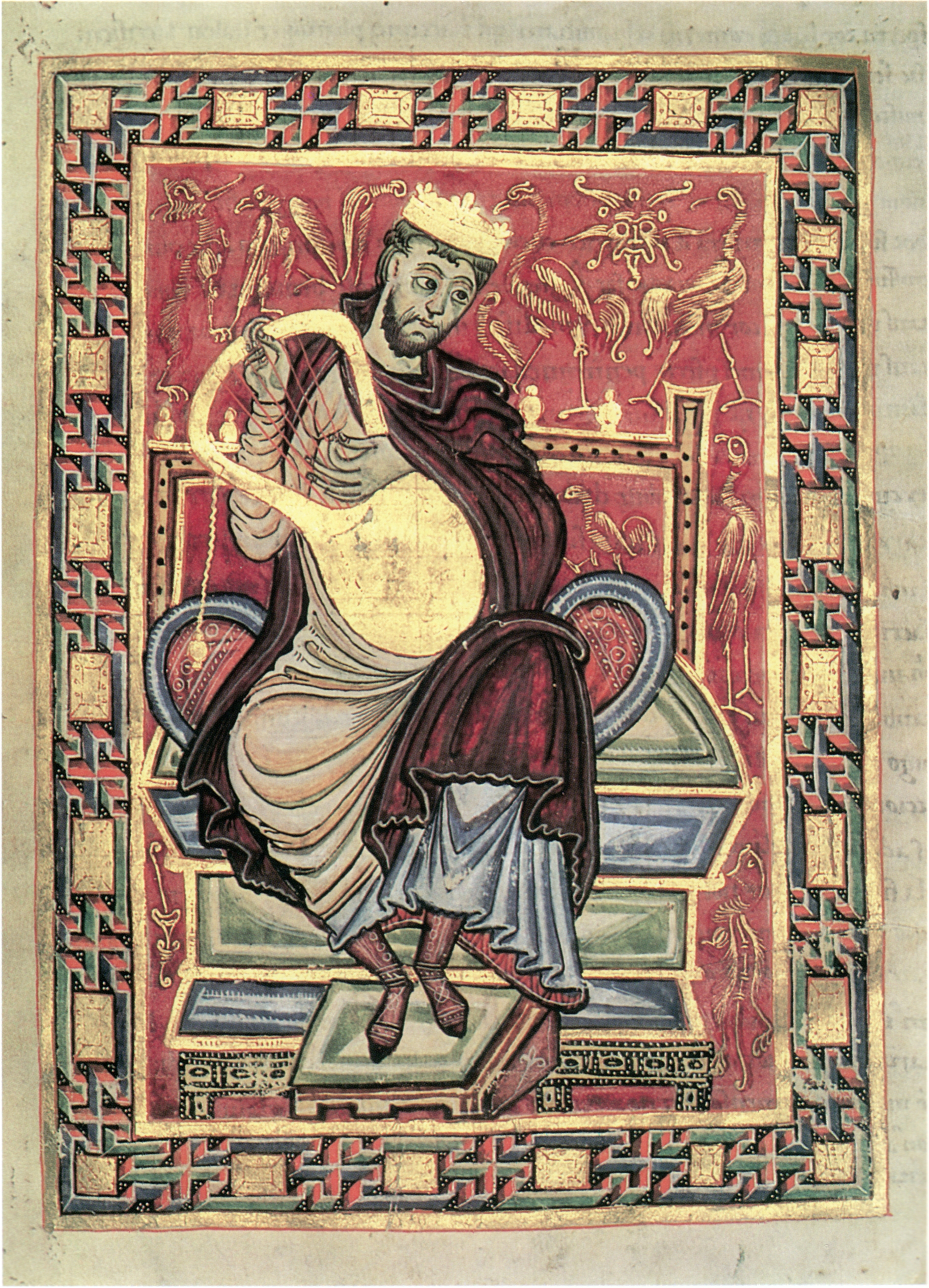
Showing posts with label Psalms. Show all posts

Friday, February 07, 2020

Sermons on Psalm 118[119]

An Orthodox Funeral, at which is chanted Psalm 118

In August 2014, I began a series of sermons on Psalm 118 (in the Septuagint, Psalm 119 in Protestant translations), and have preached an average of 4 sermons a year on this Psalm, and so after 5 1/2 years, I have finally finished the series. Here is the text of the Psalm, with the sermons at the end of each of the 22 sections, which in the Hebrew text consist of 8 lines each, and in each section the lines all begin with the letter of the Hebrew alphabet which correspond to that section. This is thus an acrostic Psalm, and the longest chapter in the Bible.

I drew heavily upon St. Theophan the Recluse's commentary on Psalm 118, but also on Blessed Theodoret, St. Augustine, and Cassiodorus, as well as some the occasional commentaries of some other saints. I would strongly recommend reading all of these commentaries, but if you were looking for a single source on Psalm 118, St. Theophan's commentary is the one to get.

St. John of Shanghai's words on the importance of the Psalms in general and of this Psalm in particular are mentioned several times in the various sermons below:
"Perhaps it will happen that you will die without having once in your life read in full the Psalter of David... You will die, and only then will good people read over your lifeless body this holy Psalter, which you had no time even, to open while you lived on earth! Only then, at your burial, will they sing over you the wondrously instructive, sweetly-wise-but alas, to you completely unknown-words of David: Blessed are the undefiled in the way, who walk in the law of the Lord... Blessed are they who search His testimonies. who keep His revelations, and seek Him with their whole heart. Do you hear: Blessed are they who search His testimonies, seek out the revelations of the Lord; and you had no time even to think of them! What will your poor soul feel then, your soul to which every word of the Psalmist, repeated by a reader or singer over your coffin, will sound as a strict reproach that you never read this sacred book?... Open now, before it is too late, this wondrous book of the Prophet King. Open it and read with attention at least this 118th Psalm, and you will involuntarily feel that your heart becomes humble, soft, that in the words of David are the words of the merit of God, and you will repeat involuntarily, many times, with sighing of heart, the verse of this Psalm: I have gone astray like a sheep that is lost; seek out Thy slave, Lord!" (from his weekly diocesan bulletin (Shanghai, November 24, 1941, no. 503, emphasis added).

א
Aleph

Blessed are the blameless in the way, who walk in the law of the Lord.  Blessed are they that search out His testimonies; with their whole heart shall they seek after Him.  For they that work iniquity have not walked in His ways.  Thou hast enjoined Thy commandments, that we should keep them most diligently.  Would that my ways were directed to keep Thy statutes.  Then shall I not be ashamed, when I look on all Thy commandments.  I will confess Thee with uprightness of heart, when I have learned the judgments of Thy righteousness.  I will keep thy statutes; do not utterly forsake me.
Blessed are the Blameless (Psalm 118:1-8)
ב
Beth

Wherewithal shall a young man correct his way? By keeping Thy words.  With my whole heart have I sought after Thee, cast me not away from Thy commandments.  In my heart have I hid Thy sayings that I might not sin against Thee.  Blessed art Thou, O Lord, teach me Thy statutes.  With my lips have I declared all the judgments of Thy mouth.  In the way of Thy testimonies have I found delight, as much as in all riches.  On Thy commandments will I ponder, and I will understand Thy ways.  On Thy statutes will I meditate; I will not forget Thy words.
Blessed art Thou, O Lord, Teach Me Thy Statutes (Psalm 118:9-16)
ג
Gimel

Give reward unto Thy servant, quicken me and I will keep Thy words.  O unveil mine eyes, and I shall perceive wondrous things out of Thy law.  I am a sojourner on the earth, hide not from me Thy commandments.  My soul hath longed to desire Thy judgments at all times.  Thou hast rebuked the proud; cursed are they that decline from Thy commandments.  Remove from me reproach and contempt, for after Thy testimonies have I sought.  For princes sat and they spake against me, but Thy servant pondered on Thy statutes.  For Thy testimonies are my meditation, and Thy statutes are my counselors.
Unveil Mine Eyes (Psalm 118:17-24)
ד
Daleth

My soul hath cleaved unto the earth; quicken me according to Thy word.  My ways have I declared, and Thou hast heard me; teach me Thy statutes.  Make me to understand the way of Thy statutes, and I will ponder on Thy wondrous works.  My soul hath slumbered from despondency, strengthen me with Thy words.  Remove from me the way of unrighteousness, and with Thy law have mercy on me.  I have chosen the way of truth, and Thy judgments have I not forgotten.  I have cleaved to Thy testimonies, O Lord; put me not to shame.  The way of Thy commandments have I run, when Thou didst enlarge my heart.
The Doors of Repentance (Psalm 118:25-32)

ה
He

Set before me for a law, O Lord, the way of Thy statutes, and I will seek after it continually.  Give me understanding, and I will search out Thy law, and I will keep it with my whole heart.  Guide me in the path of Thy commandments, for I have desired it.  Incline my heart unto Thy testimonies and not unto covetousness.  Turn away mine eyes that I may not see vanity, quicken Thou me in Thy way.  Establish for Thy servant Thine oracle unto fear of Thee.  Remove my reproach which I have feared, for Thy judgments are good.  Behold, I have longed after Thy commandments; in Thy righteousness quicken me.
The Way of Thy Statutes (Psalm 118:33-40)

ו
Vav

Let Thy mercy come also upon me, O Lord, even Thy salvation according to Thy word.  So shall I give an answer to them that reproach me, for I have hoped in Thy words.  And take not utterly out of my mouth the word of truth, for in Thy judgments have I hoped.  So shall I keep Thy law continually, for ever, and unto the ages of ages.  And I walked in spaciousness, for after Thy commandments have I sought.  And I spake of Thy testimonies before kings, and I was not ashamed.  And I meditated on Thy commandments which I have greatly loved.  And I lifted up my hands to Thy commandments which I have loved, and I pondered on Thy statutes.
 Our Anchor of Hope (Psalm 118:41-48)

ז
Zayin

Remember Thy words to Thy servant, wherein Thou hast made me to hope.  This hath comforted me in my humiliation, for Thine oracle hath quickened me.  The proud have transgressed exceedingly, but from Thy law have I not declined.  I remembered Thy judgments of old, O Lord, and was comforted.  Despondency took hold upon me because of the sinners who forsake Thy law.  Thy statutes were my songs in the place of my sojourning.  I remembered Thy name in the night, O Lord, and I kept Thy law.  This hath happened unto me because I sought after Thy statutes.
Remember  Thy Words to Thy Servant (Psalm 118:49-56)

ח
Heth

Thou art my portion, O Lord; I said that I would keep Thy law.  I entreated Thy countenance with my whole heart: Have mercy on me according to Thy word.  I have thought on Thy ways, and I have turned my feet back to Thy testimonies.  I made ready, and I was not troubled, that I might keep Thy commandments.  The cords of sinners have entangled me, but Thy law have I not forgotten.  At midnight I arose to give thanks unto Thee for the judgments of Thy righteousness.  I am a partaker with all them that fear Thee, and with them that keep Thy commandments.  The earth, O Lord, is full of Thy mercy; teach me Thy statutes.
Overcoming Sin (Psalm 118:57-64)

 ט
Teth

Thou hast dealt graciously with Thy servant, O Lord, according to Thy word.  Goodness and discipline and knowledge teach Thou me, for in Thy commandments have I believed.  Before I was humbled, I transgressed; therefore Thy saying have I kept.  Thou art good, O Lord, and in Thy goodness teach me Thy statutes.  Multiplied against me hath been the unrighteousness of the proud; but as for me, with my whole heart will I search out Thy commandments.  Curdled like milk is their heart; but as for me, in Thy law have I meditated.  It is good for me that Thou hast humbled me, that I might learn Thy statutes.  The law of Thy mouth is better to me than thousands of gold and silver.
God's Work to Guide Us on the Path of Salvation (Psalm 118:65-72)

י
Yod

Thy hands have made me and fashioned me; give me understanding and I will learn Thy commandments.  They that fear Thee shall see me and be glad, for on Thy words have I set my hope.  I have known, O Lord, that Thy judgments are righteousness, and with truth hast Thou humbled me.  Let now Thy mercy be my comfort, according to Thy saying unto Thy servant.  Let Thy compassions come upon me and I shall live, for Thy law is my meditation.  Let the proud be put to shame, for unjustly have they transgressed against me; but as for me, I will ponder on Thy commandments.  Let those that fear Thee return unto me, and those that know Thy testimonies.  Let my heart be blameless in Thy statutes, that I may not be put to shame.
Thy hands have made me and fashioned me (Psalm 118:73-80)

כ
Kaph

My soul fainteth for Thy salvation; on Thy words have I set my hope.  Mine eyes are grown dim with waiting for Thine oracle; they say: When wilt Thou comfort me?  For I am become like a wine-skin in the frost; yet Thy statutes have I not forgotten.  How many are the days of Thy servant? When wilt Thou execute judgment for me on them that persecute me?  Transgressors have told me fables, but they are not like Thy law, O Lord.  All Thy commandments are truth. Without a cause have men persecuted me; do Thou help me.  They well nigh made an end of me on the earth; but as for me, I forsook not Thy commandments.  According to Thy mercy quicken me, and I will keep the testimonies of Thy mouth.
On Thy Words have I Set My Hope (Psalm 118:81-88)

ל
Lamed

For ever, O Lord, Thy word abideth in heaven.  Unto generation and generation is Thy truth; Thou hast laid the foundation of the earth, and it abideth.  By Thine ordinance doth the day abide, for all things are Thy servants.  If Thy law had not been my meditation, then should I have perished in my humiliation.  I will never forget Thy statutes, for in them hast Thou quickened me.  I am Thine, save me; for after Thy statutes have I sought.  Sinners have waited for me to destroy me; but Thy testimonies have I understood.  Of all perfection have I seen the outcome; exceeding spacious is Thy commandment.
Forever, O Lord, Thy Word Abideth in Heaven (Psalm 118:89-96)

מ
Mem

O how I have loved Thy law, O Lord! the whole day long it is my meditation.  Above mine enemies hast Thou made me wise in Thy commandment, for it is mine for ever.  Above all that teach me have I gained understanding, for Thy testimonies are my meditation.  Above mine elders have I received understanding, for after Thy  commandments have I sought.  From every way that is evil have I restrained my feet that I might keep Thy words.  From Thy judgments have I not declined, for Thou hast set a law for me.  How sweet to my palate are Thy sayings! more sweet than honey to my mouth.  From Thy commandments have I gained understanding; therefore have I hated every way of unrighteousness.
Loving God and Hating Sin (Psalm 118:97-104)

נ
Nun

Thy law is a lamp unto my feet and a light unto my paths.  I have sworn and resolved that I will keep the judgments of Thy righteousness.  I was humbled exceedingly; O Lord, quicken me according to Thy word.  The free-will offerings of my mouth be Thou now pleased to receive, O Lord, and teach me Thy judgments.  My soul is in Thy hands continually, and Thy law have I not forgotten.  Sinners have set a snare for me, yet from Thy commandment have I not strayed.  I have inherited Thy testimonies for ever, for they are the rejoicing of my heart.  I have inclined my heart to perform Thy statutes for ever for a recompense.
A Light Unto My Paths (Psalm 118:105-112)

ס
Samech

Transgressors have I hated, but Thy law have I loved.  My helper and my protector art Thou; on Thy words have I set my hope.  Depart from me, ye evil-doers, and I will search out the commandments of my God.  Uphold me according to Thy saying and quicken me, and turn me not away in shame from mine expectation.  Help me, and I shall be saved; and I will meditate on Thy statutes continually.  Thou hast set at nought all that depart from Thy statutes, for unrighteous is their inward thought.  I have reckoned as transgressors all the sinners of the earth, therefore have I loved Thy testimonies.  Nail down my flesh with the fear of Thee, for of Thy judgments am I afraid.
Hitherto Hath the Lord Helped Us (Psalm 118:113-120)

ע
Ayin

I have wrought judgment and righteousness; O give me not up to them that wrong me.  Receive Thy servant unto good, let not the proud falsely accuse me.  Mine eyes have failed with waiting for Thy salvation, and for the word of Thy righteousness.  Deal with Thy servant according to Thy mercy, and teach me Thy statutes.  I am Thy servant; give me understanding, and I shall know Thy testimonies.  It is time for the Lord to act; for they have dispersed Thy law.  Therefore have I loved Thy commandments more than gold and topaz.  Therefore I directed myself according to all Thy commandments; every way that is unrighteous have I hated.

The Eye of the Soul (Psalm 118:121-128)

פ
Pe

Wonderful are Thy testimonies; therefore hath my soul searched them out.  The unfolding of Thy words will give light and understanding unto babes.  I opened my mouth and drew in my breath, for I longed for Thy commandments.   Look upon me and have mercy on me, according to the judgment of them that love Thy name.  My steps do Thou direct according to Thy saying, and let no iniquity have dominion over me.  Deliver me from the false accusation of men, and I will keep Thy commandments.  Make Thy face to shine upon Thy servant, and teach me Thy statutes.  Mine eyes have poured forth streams of waters, because I kept not Thy law.

Wonderful are Thy Testimonies (Psalm 118:129-136)

צ
Tsade

Righteous art Thou, O Lord, and upright are Thy judgments.  Thou hast ordained as Thy testimonies exceeding righteousness and truth.  My zeal for Thee hath made me to pine away, because mine enemies have forgotten Thy words.  Thine oracle is tried with fire to the uttermost, and Thy servant hath loved it.  I am young and accounted as nothing, yet Thy statutes have I not forgotten.  Thy righteousness is an everlasting righteousness, and Thy law is truth.  Tribulations and necessities have found me, Thy commandments are my meditation.  Thy testimonies are righteousness for ever; give me understanding and I shall live.

Blessed are They that Hear the Word of God and Keep it (Psalm 118:137-144)

ק
Qoph

I have cried with my whole heart; hear me, O Lord, and I will seek after Thy statutes.  I have cried unto Thee; save me, and I will keep Thy testimonies.  I arose in the dead of night and I cried; on Thy words have I set my hope.  Mine eyes woke before the morning that I might meditate on Thy sayings.  Hear my voice, O Lord, according to Thy mercy; according to Thy judgment, quicken me.  They have drawn nigh that lawlessly persecute me, but from Thy law are they far removed.  Near art Thou, O Lord, and all Thy ways are truth. From the beginning I have known from Thy testimonies that Thou hast founded them for ever.
Imitating God (Psalm 118:145-152)

ר
Resh

Behold my humiliation and rescue me, for Thy law have I not forgotten.  Judge my cause and redeem me; for Thy word's sake quicken me.  Far from sinners is salvation, for they have not sought after Thy statutes.  Thy compassions are many, O Lord; according to Thy judgment quicken me.  Many are they that persecute me and afflict me; from Thy testimonies have I not declined.  I beheld men acting foolishly and I pined away, because they kept not Thy sayings.  Behold, how I have loved Thy commandments; O Lord, in Thy mercy, quicken me.  The beginning of Thy words is truth, and all the judgments of Thy righteousness endure for ever.
If They Hear Not Moses and the Prophets (Psalm 118:153-160)

ש
Shin

Princes have persecuted me without a cause, and because of Thy words my heart hath been afraid.  I will rejoice in Thy sayings as one that findeth great spoil.  Unrighteousness have I hated and abhorred, but Thy law have I loved.  Seven times a day have I praised Thee for the judgments of Thy righteousness.  Much peace have they that love Thy law, and for them there is no stumbling-block.  I awaited Thy salvation, O Lord, and Thy commandments have I loved.  My soul hath kept Thy testimonies and hath loved them exceedingly.  I have kept Thy commandments and Thy testimonies, for all my ways are before Thee, O Lord.

All My Ways are Ever Before Thee (Psalm 118:161-168)

ת
Tav

Let my supplication draw nigh before Thee, O Lord; according to Thine oracle give me understanding.  Let my petition come before Thee, O Lord; according to Thine oracle deliver me.  My lips shall pour forth a hymn when Thou hast taught me Thy statutes.  My tongue shall speak of Thy sayings, for all Thy commandments are righteousness.  Let Thy hand be for saving me, for I have chosen Thy commandments.  I have longed for Thy salvation, O Lord, and Thy law is my meditation.  My soul shall live and shall praise Thee, and Thy judgments will help me.  I have gone astray like a sheep that is lost; O seek Thy servant, for I have not forgotten Thy commandments. 
The Signs of Life (Psalm 118:169-176)

Note: The translation of Psalm 118 is that of The Psalter According to the Seventy, © Copyright Holy Transfiguration Monastery, Brookline, MA, used by permission. All rights reserved. 

Wednesday, August 01, 2018

Stump the Priest: What does the inscription on my Cross say?

Question: "What does the inscription on the back of my Cross say?"

There are two common inscriptions on the backs of Russian baptismal Crosses:


1. Probably the most common is "Спаси и сохрани" (Spasi i sokhrani), which means "Save and protect."


2. The next most common inscription is "Да воскреснет Бог, и разыдутся врази Его, и да бежат от лица Его ненавидящей Его..." (Da voskresnet Bog, i razidutsya brazi ego, i da bezhat ot litsa Ego nenavidyashchei Ego...). This is sometimes called an "Old Believer Cross", and the text is the pre-nikonian Slavonic text of the prayer said just before we go to bed, which is based on Psalm 67[68]: "Let God arise and let His enemies be scattered, and let them that hate Him flee from before his face." The prayer in the prayer book goes on to say: "As smoke vanisheth, so let them vanish; as wax melteth before the fire, so let the demons perish at the presence of them that love God, and who sign themselves with the Sign of the Cross, and who say in gladness: Rejoice, O Cross of the Lord, for thou drivest away the demons by the power of our Lord Jesus Christ, Who was crucified on thee, Who descended into Hades and trampled on the power of the devil, and gave us His precious Cross for the driving away of all enemies. O most precious and life-giving Cross of the Lord, help me together with the most holy Lady Mother of God, and with all the holy heavenly powers, always, now and ever and unto the ages of ages. Amen" (Old Orthodox Prayer Book, trans. Priest Pimen Simon, Priest Theodore Jurewicz, Hieromonk German Ciuba (Erie, PA: Russian Orthodox Church of the Nativity of Christ (Old Rite), 1996), p. 45f).

For more on the meaning of this prayer, and the Psalm it is based on, you can listen to this sermon:

Let God Arise and Let His Enemies Be Scattered

See Also:

What does this inscription mean?

Friday, July 14, 2017

Stump the Priest: In the Lord Shall My Soul be Praised


Question "At the beginning of Psalm 33 (in the Septuagint), which we hear often in the liturgical services, is the line "In the Lord shall my soul be praised." This seems a strange way of putting things. What do you think this means? Are there other similar verses in the Scriptures?"

In the Boston Psalter (the translation we use liturgically), this verse is translated:
"In the Lord shall my soul be praised; let the meek hear and be glad."
This is a very literal translation of the Greek Septuagint, which is a very literal translation of the Hebrew. The King James version translates this verse as:
"My soul shall make her boast in the Lord: the humble shall hear thereof, and be glad" (Psalm 34:2).
Which translates the Hebrew idiom in a way that more clearly conveys the sense of the Hebrew. A more literal translation of the Hebrew would read:
"In the LORD doth my soul boast herself, the humble hear and rejoice."
By comparing different translations, you can often get a better idea of the range of meaning of the words in a text, and this is a good example of that.

The inscription of Psalm 33 [34], links this Psalm to David's flight from Saul, and his deliverance from the Philistine King of Gath in 1 Samuel 21:10-15:
"And David arose and fled that day for fear of Saul, and went to Achish the king of Gath. And the servants of Achish said unto him, Is not this David the king of the land? did they not sing one to another of him in dances, saying, Saul hath slain his thousands, and David his ten thousands? And David laid up these words in his heart, and was sore afraid of Achish the king of Gath. And he changed his behaviour before them, and feigned himself mad in their hands, and scrabbled on the doors of the gate, and let his spittle fall down upon his beard. Then said Achish unto his servants, Lo, ye see the man is mad: wherefore then have ye brought him to me? Have I need of mad men, that ye have brought this fellow to play the mad man in my presence? shall this fellow come into my house?"
St. Basil the Great's homily on this Psalm provides a good interpretation of the verse in question, which explains it in the light of this background:
""In the Lord shall my soul be praised." "Let no one," David says, "praise my intelligence, through which I was preserved from dangers." For, not in the power of man, nor in wisdom, but in the grace of God is salvation. "Let not," it is said, "the rich man glory in his riches, nor the wise man in his wisdom, nor the strong man in his strength, but let him that glorieth glory in this, that he understandeth and knoweth" the Lord his God [Jeremiah 9:23-24]. If, however, someone is praised for beauty of body or renowned parentage, his soul is not praised in the Lord, but each person of such a kind is occupied with vanity. The ordinary professions, in fact, those of governor, doctor, orator, or architect who constructs cities, pyramids, labyrinths, or any other expensive or ponderous masses of buildings, do not merit to be truly praised. They who are praised for these things do not keep their soul in the Lord. It suffices us for every dignity to be called servants of such a great Lord. Certainly, one who ministers to the King will not be high-minded because he has been assigned to this particular rank of the ministry, and having been considered worthy to serve God, he will not contrive for himself praises from elsewhere, will he, as if the call of the Lord did not suffice for all pre-eminence of glory and distinction? 
Therefore, "in the Lord shall my soul be praised: let the meek hear and rejoice." Since with the help of God, by deceiving my enemies, he says, I have successfully obtained safety without war, by only the changing of my countenance, "Let the meek hear" that it is possible even for those at peace to erect a trophy, and for those not fighting to be named victors. "And let them rejoice," being strengthened to embrace meekness by my example. "O Lord, remember David, and all his meekness" (Psalm 131[132]:1 LXX]. Meekness is indeed the greatest of the virtues; therefore, it is counted among the beatitudes. "Blessed are the meek," it is said, "for they shall posses the earth" [Matthew 5:4(The Fathers of the Church: St. Basil, Exegetic Homilies,, Homily 16, trans. Sister Agnes Clare Way, C.D.P. (Washington, D.C.: Catholic University of America Press, 1963),  p. 251ff).

Thursday, September 29, 2016

Stump the Priest: A Sacrifice of Righteousness

The Prophet Nathan confronts King David with his sin.

Question: "I have often been perplexed by the last two sentences of Psalm 50. Is this thought to me a Messianic psalm? If so, I find difficulty in the culmination of the psalm being animal sacrifice. How ought we to incorporate this psalm in our daily prayers in light of this verse?"

Psalm 50 [51 in Protestant Bibles] is not really a Messianic psalm in the usual sense. It is a penitential psalm. In fact, you could say that it is THE penitential psalm We not only pray this psalm daily, but usually we pray it several times a day in the services, as well as in our private prayers.

To understand the ending, you need to keep in mind the context of the entire Psalm. We are told in the superscription that it is "a psalm of David, when Nathan the Prophet came unto him, when he went in unto Bathsheba, the wife of Uriah." We read about this in 2 Samuel 11:1-12:23. There we are told that it was "the time when kings go forth to battle" and yet, for the first time in his adult life, David the King did not go into battle with everyone else, but rather "David tarried still at Jerusalem." Then, in his idleness, one evening, being unable to sleep, David walked upon the roof of his house, "and from the roof he saw a woman washing herself; and the woman was very beautiful to look upon." And rather than put up any resistance to this temptation, he had someone find out that she was Bathsheba, the wife of Uriah the Hittite. And not allowing the fact that she was married to another man to dissuade him, he seduced her, and got her pregnant. Then hoping to cover up his sin, he called for Uriah to return to Jerusalem (who was one of his own soldiers, putting his own life on the line for his king and the nation of Israel), hoping that he would sleep with his wife, and then believe that her child was his own. But Uriah proved to be a better man than David, because he would not allow himself the comforts of home while his fellow soldiers were fighting in the field. He told David:
"The ark, and Israel, and Judah, abide in tents; and my lord Joab, and the servants of my lord, are encamped in the open fields; shall I then go into mine house, to eat and to drink, and to lie with my wife? as thou livest, and as thy soul liveth, I will not do this thing."
David even called for Uriah to eat with him, and he got him drunk, but even then "he went out to lie on his bed with the servants of his lord, but went not down to his house."

Nevertheless, rather than admit his own guilt, David sent Uriah back to the battle, and wrote to Joab, his general:
"Set ye Uriah in the forefront of the hottest battle, and retire ye from him, that he may be smitten, and die."
Joab did as he was told, Uriah was killed in battle, and word was sent back to David. Then David took Bathsheba as a wife, and perhaps thought that he had gotten away with it... but he had not.

King David was, we are told "a man after God's own heart" (1 Samuel 13:14), and "the anointed of the God of Jacob, and the sweet psalmist of Israel" (2 Samuel 23:1), and yet he fell into not only adultery but murder. How was this possible?

St. John Chrysostom says of this:
"And the prophet was found in adultery, the pearl in the mud. However, he did not yet understand that he had sinned; the passion ravaged him to such a great extent. Because, when the charioteer gets drunk, the chariot moves in an irregular, disorderly manner. What the charioteer is to the chariot, the soul is to the body. If the soul becomes darkened, the body rolls in the mud. As long as the charioteer stands firm, the chariot drives smoothly. However, when he becomes exhausted and is unable to hold the reins firmly, you see this very chariot in terrible danger. The exact same thing happens to man. As long as the soul is sober and vigilant, this very body remains in purity. However, when the souls is darkened, this very body rolls in mud and in lusts. Therefore, what did David do? He committed adultery; yet neither was he aware nor was he censured by anyone. This occurred in his most venerable years, so you may learn that, if you are indolent, not even old age benefits you, nor, if you are earnest, can youthful years seriously harm you. Behavior does not depend on age but on the direction of the will. Although David was twelve years old, he was a judge; his predecessors, however, who were old in years, committed adultery; and neither did old age benefit them nor youth injure this one. So you may learn that the affairs of prudence rely upon the will and do not depend on age, just remember that David was found in his venerable years falling into adultery and committing murder; and he reach such a pathetic state that we was unaware that he had sinned, because his mind, which was the charioteer, was drunk from debauchery" (The Fathers of the Church: St. John Chrysostom, On Repentance and Almsgiving, 2:2:5-7, trans. Michael P. McHugh (Washington, D.C.: Catholic University of America Press, 1998),  p. 18f).
St. John tells us, that since when a physician falls ill another physician must cure him, likewise, when one prophet fell into sin, another Prophet was sent to cure him. He did not immediately confront him, lest having his sin publicly exposed at once, he become defiant. Instead, he used a story to cause the King to pronounce judgment over himself:
"And the Lord sent Nathan unto David. And he came unto him, and said unto him, "There were two men in one city; the one rich, and the other poor. The rich man had exceeding many flocks and herds: But the poor man had nothing, save one little ewe lamb, which he had bought and nourished up: and it grew up together with him, and with his children; it did eat of his own meat, and drank of his own cup, and lay in his bosom, and was unto him as a daughter. And there came a traveller unto the rich man, and he spared to take of his own flock and of his own herd, to dress for the wayfaring man that was come unto him; but took the poor man's lamb, and dressed it for the man that was come to him." And David's anger was greatly kindled against the man; and he said to Nathan, "As the Lord liveth, the man that hath done this thing shall surely die: And he shall restore the lamb fourfold, because he did this thing, and because he had no pity." And Nathan said to David, "Thou art the man!" (2 Samuel 12:1-7).
St. John Chrysostom observes:
"What did the king say? "I have sinned against the Lord." He did not say, "Who are you who censures me? Who sent you to speak with such boldness? With what daring did you prevail?" He did not say anything of the sort; rather, he perceived the sin. And what did he say? "I have sinned against the Lord." Therefore, what did Nathan say to him? "And the Lord remitted your sin." You condemned yourself; I [God] remit your sentence. You confessed prudently; you annulled the sin. You appropriated a condemnatory decision against yourself; I repeal the sentence. Can you see that what is written in Scripture was fulfilled: "Be the first one to tell of your transgressions so you may be justified" [Isaiah 43:26 LXX]? How toilsome is it to be the first one to declare the sin?" (The Fathers of the Church: St. John Chrysostom, On Repentance and Almsgiving, 2:2:9, trans. Michael P. McHugh (Washington, D.C.: Catholic University of America Press, 1998),  p. 20f).
So you find in Psalm 50 the full expression of the Prophet David's repentance. Towards the end of the psalm, we find the references to animal sacrifices. The Prophet, having come to see the depth of his sin, recognized the inadequacy of simply offering animal sacrifice to be reconciled with God:
"For if Thou hadst desired sacrifice, I had given it; with whole-burnt offerings Thou shalt not be pleased. A sacrifice unto God is a broken spirit; a heart that is broken and humbled God will not despise" (Psalm 50 [51]:16-17).
St. Augustine comments that this foresees the time when these sacrifices would be replaced by the reality that they pointed towards:
"David was living at that time when sacrifices of victim animals were offered to God, and he saw these times that were to be. Do we not perceive ourselves in these words? Those sacrifices were figurative, foretelling the One Saving Sacrifice. Not even we have been left without a Sacrifice to offer to God. For hear what he saith, having a concern for his sin, and wishing the evil thing which he hath done to be forgiven him: “If Thou hadst willed,” he saith, “sacrifice, I would have given it surely. With holocausts Thou wilt not be delighted.” Nothing shall we therefore offer? So shall we come to God? And whence shall we propitiate Him? Offer; certainly in thyself thou hast what thou mayest offer. Do not from without fetch frankincense, but say, “In me are, O God, Thy vows, which I will render of praise to Thee.” Do not from without seek cattle to slay, thou hast in thyself what thou mayest kill. “Sacrifice to God is a spirit troubled, a heart contrite and humbled God despiseth not” (ver. 17). Utterly he despiseth bull, he-goat, ram: now is not the time that these should be offered. They were offered when they indicated something, when they promised something; when the things promised come, the promises are taken away. “A heart contrite and humbled God despiseth not.” Ye know that God is high: if thou shalt have made thyself high, He will be from thee; if thou shalt have humbled thyself, He will draw near to thee" (Exposition on the Psalms, Psalm 50 [51], 21).
The psalm ends with these words:
"Do good, O Lord, in Thy good pleasure unto Zion, and let the walls of Jerusalem be builded. Then shalt Thou be pleased with a sacrifice of righteousness, with oblation and whole-burnt offerings. Then shall they offer bullocks upon Thine altar" (Psalm 50[51]:18-19).
Blessed Theodoret sees in these verses not only a prophecy of the Babylonian captivity (which happened several centuries after the time of King David, and the subsequent return and restoration of Jerusalem and Temple; but also a prophecy of the coming of the Church:
"From these words we are taught more clearly that the psalm is full of prophecy: the verses bear on those compelled to dwell in Babylon, longing for liberation from slavery and bewailing the desolation of the city. They beg that the city be granted some pity and recover its former good fortune, with the ramparts repaired, and the liturgy performed according to the Law. As it is, he is saying, it is not possible for those living in foreign parts to offer to you the prescribed sacrifices, as the Law is clear about sacrificing in that city alone. But if we were to be granted the return and were to rebuild the Temple, then we would offer to you the prescribed sacrifices. Now, very applicable to them is the verse, You will open my lips, O Lord, and my mouth will declare your praise: theirs is the cry, "How shall we sin the Lord's song in a foreign land? [Psalm 136 [137]:4]" The conclusion of this psalm contains, however, a further prophecy as well. You see, after setting forth above the gifts of the all-holy Spirit, he went on to show the God all to be not pleased with the sacrifices according to the Law, and his prayer is for the new Zion to emerge, the heavenly Jerusalem to be built on earth, and the new way of life to be inaugurated as soon as possible, offering not irrational victims but the offering and sacrifices of righteousness, and rational and living holocausts, of which blessed Paul says, "I urge you brethren, through the mercies of God to present your bodies as living sacrifice, holy, pleasing to God, your rational worship [Romans 12:1]." The most divine David, you see, in so far as he had learned the obscure and hidden things of the wisdom of God, was aware that the New Testament contains the complete forgiveness of sins, and yearned for rapid and complete liberation from sins. And in his longing to attain in his own case the rapid and generous purification, he spoke these verses" (Theodoret of Cyrus: Commentary on the Psalms, 1-72, trans. Robert C. Hill (Washington, D.C.: Catholic University of America Press, 2000), p. 302f).
So while this psalm is not a Messianic psalm per se, it certainly does has prophetic elements that relate to the work of the coming Messiah.


Thursday, January 21, 2016

Stump the Priest: "Against me is Thine anger made strong"


Question: "How do we understand Psalm 87[88]:7 ["Against me is Thine anger made strong, and all Thy billows hast Thou brought upon me"] that we do in the Six Psalms of Matins? This Psalm is about Christ, yes? And if so, how do we understand that in regards to Him?"

I am sure that there are patristic commentaries that I do not have access to, but of those that I do, it seems most of the Fathers do interpret this Psalm as referring to Christ. This would include St. Cyril of Jerusalem, St. Ambrose of Milan, St. John Chrysostom, St. Augustine, and Cassiodorus. Of these fathers, only St. Augustine and Cassiodorus comment on this specific verse, at least so far as I have seen. Cassiodorus used St. Augustine's commentary when writing his own, and so it is not an entirely independent witness on this.

Blessed Theodoret also comments on this verse, but he interprets this Psalm as referring to the Jews in the Babylonian Captivity. Since there are often multiple levels of meanings to any given passage, Blessed Theodoret's interpretation is not mutually exclusive with those Fathers who see this in reference to Christ.

But here is what St. Augustine says about this passage, which is interesting to me primarily because of what he does not say:

""Thy indignation lieth hard upon Me" (ver. 7), or, as other copies have it, "Thy anger;" or, as others, "Thy fury:" the Greek word θυμὸς having undergone different interpretations. For where the Greek copies have ὀργὴ, no translator hesitated to express it by the Latin ira; but where the word is θυμὸς, most object to rendering it by ira, although many of the authors of the best Latin style, in their translations from Greek philosophy, have thus rendered the word in Latin. But I shall not discuss this matter further: only if I also were to suggest another term, I should think "indignation" more tolerable than "fury," this word in Latin not being applied to persons in their senses. What then does this mean, "Thy indignation lieth hard upon Me," except the belief of those, who knew not the Lord of Glory? who imagined that the anger of God was not merely roused, but lay hard upon Him, whom they dared to bring to death, and not only death, but that kind, which they regarded as the most execrable of all, namely, the death of the Cross: whence saith the Apostle, "Christ hath redeemed us from the curse of the Law, being made a curse for us: for it is written, Cursed is every one that hangeth upon a tree [Galatians 3:13]" (Exposition on the Psalms, Psalm 87).

Likewise, Cassiodorus says of this verse "This was the belief of those permitted to prevail for their own destruction, that through God's anger Jesus Christ had confronted the hazards of the of the passion" (Explanation of the Psalms, Vol. 2, trans. P. G. Walsh, (New York: Paulist Press,1991), p. 345).

What is interesting here to me is that if St. Augustine or Cassiodorus believed that at the crucifixion, the wrath of God the Father was poured out on the Son, this would have been a perfect occasion for him to expound upon it, but instead he says that this verse only alludes to the false opinion of those who rejected Christ. This goes to show that this distortion of the doctrine of the Atonement was unknown to these Fathers.

For more information, see:

Stump the Priest: The Atonement

Stump the Priest: Allegorical Interpretations of Scripture?

Wednesday, November 18, 2015

Stump the Priest: Singing the Psalms


Question: "I heard you mention a way to memorize the psalms with singing, and I wondered if you elaborate on that?"

Singing is a very effective tool for memorization and instruction in general. I have posted previously about how Handel's Messiah can be useful in helping one to memorize Scripture, and in the hymns of the Church we sign verses from the Psalms, such as in Prokimena, and we also sing entire Psalms. By singing the Psalms, you can make memorizing them much easier then simply memorizing them as texts, and singing the Psalms is itself a spiritually edifying endeavor that the Apostles repeatedly encourages us to engage in (Ephesians 5:19; Colossians 3:16; James 5:13).

Here are some practical tips on how to go about this.

First of all, it is important to use a consistent translation. I prefer the "Boston" Psalter, for the reasons laid out in my article on Translations.

I have found it especially helpful to learn to sing songs in Byzantine chant, and there are several CDs out there that use the Boston Psalter translation. Here are two CDs I would recommend for this purpose. The second CD is not exclusively Psalms or Prokimena, but it does contain them:

O Give Thanks Unto the Lord (Hymns from the Psalter, Chanted in English by the Monks of the Holy Transfiguration Monastery)

The Divine Liturgy of Saint John Chrysostom (Set of 2 CDs -- Contains the choral responses from the Doxology in Matins to the end of Liturgy. Chanted by the sisters of Holy Nativity Convent in Byzantine chant)

You can also get a CD of the Boston Psalter being read:

https://www.holycross-hermitage.com/store/orthodox-media/cds/psalter-audio-cd/

Monday, August 25, 2014

Review: Psalm 118: Commentary, by St. Theophan the Recluse


Psalm 118: Commentary, by St. Theophan the Recluse; trans. Archpriest Gleb Wleskov; edited by Seraphim Englehardt.

Psalm 118 (119 in Protestant Bibles) is the longest chapter of the Bible, and is a unique psalm in many respects. It is an acrostic psalm (it has 22 sections, corresponding to the 22 letters of the Hebrew alphabet, and each section consists of 8 verses); and every verse uses one of about a dozen synonyms for God's law (testimonies, commandments, precepts, word, ways, truth, judgments, statutes, etc).

In his introduction, St. Theophan notes that St. Augustine was for a long time unable to write a commentary on this psalm: ""How often," said he, "was I asked to give its interpretation, but when I was ready to begin, I backed off, realizing that it was above my strength. For the simpler this psalm would seem to be, the deeper it actually turns out to be, and I am unable to say how profound it is. Other psalms have dark spots; this one is so clear that all one has to do is read or listen; there is nothing to interpret. And yet, getting ready to comment on it, I cannot say I will be able to do anything even now." St. Ambrose also wrote: "Other psalms contain moral issues, but they are like stars spread out in the sky; this one is like the sun, abundantly pouring forth its light at high noon."

Given that the Church has appointed this psalm to be read every day of the week (Monday through Friday) at the Midnight Office, on every Saturday at Matins, often also on the Sunday Matins, and at Funerals, the Church clearly wants us to spend time studying and meditating on this Psalm.

St. John of Shanghai, commenting on the importance of the Psalms especially drew attention to the importance of this psalm:
"Perhaps it will happen that you will die without having once in your life read in full the Psalter of David... You will die, and only then will good people read over your lifeless body this holy Psalter, which you had no time even, to open while you lived on earth! Only then, at your burial, will they sing over you the wondrously instructive, sweetly-wise-but alas, to you completely unknown-words of David: Blessed are the undefiled in the way, who walk in the law of the Lord... Blessed are they who search His testimonies. who keep His revelations, and seek Him with their whole heart. Do you hear: Blessed are they who search His testimonies, seek out the revelations of the Lord; and you had no time even to think of them! What will your poor soul feel then, your soul to which every word of the Psalmist, repeated by a reader or singer over your coffin, will sound as a strict reproach that you never read this sacred book?... Open now, before it is too late, this wondrous book of the Prophet King. Open it and read with attention at least this 118th Psalm, and you will involuntarily feel that your heart becomes humble, soft, that in the words of David are the words of the merit of God, and you will repeat involuntarily, many times, with sighing of heart, the verse of this Psalm: I have gone astray like a sheep that is lost; seek out Thy slave, Lord!" (from his weekly diocesan bulletin (Shanghai, November 24, 1941, no. 503).
St. Theophan's commentary on this psalm is a very comprehensive (this book is 351 pages), and weaves the commentaries of the Fathers of the Church together in a masterful, and spiritually edifying way. Each verse (there are 176 verses to this psalm) is commented on in depth. The translation has been in the works for many years, and is well done. It is also nicely bound. This text is not only a great reference work, but would be suitable as daily devotional reading. The price is a bit on the high end ($40.00), but it is well worth it.

You can order a copy by clicking here.


.