Showing posts with label Slavery. Show all posts

Saturday, April 09, 2016

Stump the Priest: Laws about Slavery


Question: "Doesn't the fact that the Old Testament has laws that allow for slavery constitute an endorsement of slavery?"

I have previously addressed the issue of why slavery existed during the period of time that the Scriptures were written, and you can read that article for more on the subject generally:

"Stump the Priest: What about Slavery in the Bible?"

But to address this specific question, let's consider the question of whether the fact that there are laws regarding divorce in Old Testament constitute an endorsement of divorce. We are told in no uncertain terms that God hates divorce (Malachi 2:16). Christ was asked by the Pharisees about the issue of Divorce in Matthew 19:1-9, and He stated that divorce should not happen: "What God has put together, let not man put asunder". But when asked why the law of Moses allowed for divorce, Christ answered "Moses, because of the hardness of your hearts, permitted you to divorce your wives, but from the beginning it was not so.  And I say to you, whoever divorces his wife, except for sexual immorality, and marries another, commits adultery; and whoever marries her who is divorced commits adultery." Divorce is the result of sin, and the Law regulated it in order to place some limitations on it, but this does not mean that divorce is something that God is in favor of.

Likewise, slavery was a universal fact of life in the ancient world, for reasons that are addressed in the above referenced article. In fact, we still have forms of involuntary servitude even in our current legal system. The 13th Amendment, which abolished slavery, allowed for involuntary servitude as a punishment for a crime, and we also still have the potential for a military draft, which is likewise a form of involuntary servitude. And even voluntary military service is somewhat analogous to indentured servitude, because once you make the commitment, you are not simply free to quit, like you would be at a regular job. All this is true, even in our times, in which we have advanced in terms of technology, education, and infrastructure beyond the imaginations of people of ancient times. There is still a social necessity for some forms of involuntary servitude, even now.

It is difficult for us to imagine what life was like during the Old Testament period, but if we want to understand it, we have to make the effort to try. They did not have the United Nations, a prison system, or a much in the way of a welfare system, though there was some provisions made for the poor. However, in those days simply having enough food to eat was a challenge, and for many people, selling themselves into slavery was a preferable option to starvation. The laws we find in the Old Testament provided rights to slaves, and placed limitations on their masters. This was in stark contrast to the pagan world which generally afforded no rights to slaves at all.

So no, the fact that there were laws to regulate something does not at all suggest that God endorsed it as a good thing.

For more information, see:

Does God Approve of Slavery According to the Bible? by Rich Deem
Does God condone slavery in the Bible? (Old Testament), by Glen Miller
Does God condone slavery in the Bible? (New Testament), by Glen Miller
Stump the Priest: What about Slavery in the Bible? by Fr. John Whiteford

Friday, September 27, 2013

Stump the Priest: What about Slavery in the Bible?


 Uncle Tom and Simon Legree

Question: "I often hear the argument that the Bible approved of slavery and that either this means that the Bible should be dismissed as having any validity, or that things evolve over time, and so just as we no longer allow slavery, perhaps we should change our views on homosexuality. How should we respond?"

To answer this question we have to consider why slavery came into existence in the first place, what the Scriptures actually say, and how it came to be that most forms of slavery came to end in the civilized world.

Why Slavery Came into Existence

Slavery was a result of the fall of man. Because of human sin, men fought with one another, and some were forced into slavery. Prior to the 19th century, Slavery was a universal fact of life in every part of the world, including Africa.

Imagine for a moment that you were a member of an Indian tribe prior to the time of Christopher Columbus, and your tribe is attacked by a neighboring tribe. In the course of that battle, your tribe captures some members of the opposing tribe. Now what do you do with them? You don't have a prison system. You can't call for United Nations Peace-keepers to take them into custody. You really have three choices: 1). You could let them go, but then these same people would be back at war with your tribe, and perhaps will kill or capture members of your tribe next, and may not be so generous. 2). You could kill them all, but all human beings have a natural aversion to killing other human beings. 3). Your only other option is to keep them as captives. Eventually, you may trade them back to the other tribe in a prisoner exchange, but at least for some time they are now on your hands. Now your tribe is barely able to feed it's members, much less feed idle prisoners, and so you put them to work, so that they can be productive and help to earn their keep. So now you have slaves... people subjected to involuntary servitude. It is only when you have strong nation states that you begin to have other options when it comes when dealing with those captured in warfare.

And it should be pointed out that even today, though we have eliminated most forms of slavery, our Constitution still allows for involuntary servitude as a punishment for a crime. We do not pay prisoners minimum wage, and yet we do put them to work to help earn their keep. We also still have the potential for a military draft -- and though many will object to this being a form of involuntary servitude, it is in fact involuntary, by definition, it does involve work, including fighting on the battlefield and risking your own life, and if you refuse to submit to the draft, you can be placed in prison, where you can still be compelled to work involuntarily.


What Does the Bible Actually Say About Slavery?

No where in scripture do you find slavery endorsed as a good thing. No where is it mandated that anyone should own slaves. In fact, if you read the book of Exodus, you will find that Slavery is presented as an evil. The Law of Moses addresses slavery, but it put restrictions on how slaves could be treated. The law put limits on how long an Israelite could be kept as a slave, and laid down  rules on how slaves could be treated. In contrast, in ancient Rome, for example, the head of a family not only could kill his slaves for any reason, but he could kill or enslave members of his own family. He had absolute power over everyone in his family, and over any slave owned by his family. Slaves were considered to be living tools, having no more rights than a shovel or a hammer.

In the New Testament, St. Paul does say that slaves should obey their masters as they would the Lord -- and this is often cited out of context to discredit Scripture. However, the context also states that masters were to treat their slaves as their brothers. Now, one may object, "How can a master treat a slave as a brother and leave him as a slave?" The answer is that a truly Christian master would have no slave in the real sense of that term. And a Christian slave would no longer be a slave if he is serving such a master out of Christian love. And a Christian slave who was serving an unbelieving master had the hope of winning his master by his love and humility.


But of course many, perhaps most Christian slave owners failed to live up to the teachings of St. Paul, but this also created the discomfort with slavery that eventually ended it.

How Most Forms of Slavery Come to an End in the Civilized World?

As I said, slavery was a universal fact of life prior to the 19th century (though bans on forms of slavery in Europe and other Christian lands have a long history)... but what changed? Out of all the religions of the world, a movement to end slavery arose... and that movement was spawned by the Christian religion. Christians, like William Wilberforce of England, and Charles Finney of the United States campaigned against Slavery. A book entitled "Uncle Tom's Cabin" was written by a Christian author, which appealed to the Christian sensibilities of the American public, and pointed out how even well intentioned Christian slave owners who considered their slaves to be part of their family nevertheless participated in a system that included unspeakable brutality, separated husbands from their wives, and parents from their children, and included the sexual abuse of women slaves. And in the character of Uncle Tom, who is a Christlike figure who is both humble, but also unbending when asked to participate in evil, the American public was moved to bring about the end of Slavery in America. There was also the Christian Tsar Alexander II, the Tsar Liberator, who ended serfdom in Russia, and did it without a civil war.

It is extremely ironic that Christianity should be especially attacked because of the fact that there is mention of slavery in the Bible, when it was Christianity that moved a slave-holding world to see the evils of slavery in the first place, and inspired them to end it. Islam still embraces slavery to this day, and yet Black Muslims act as if the reverse were true, and that it was Islam that was so much opposed to Slavery... when it fact the slave trade began largely with Muslim slave traders selling slaves to European Slave-traders. And if you are an atheist, there is no moral foundation for opposition to slavery... any more than you could be morally opposed to a cheetah eating an antelope. The strong make use of the weak as they see fit. And in fact, in militant atheist countries, Slave labor has always been and remains an accepted means of production.

And those who wish to compare the issue of slavery with homosexuality has a big problem. The Scriptures nowhere mandate slavery, or endorse it as a good thing; but the Scriptures clearly teach that homosexual sex is inherently sinful.

For more on that, I would recommend you read "Slavery, Homosexuality, and the Bible: A Response," by Robert A. J. Gagnon, Ph.D.

For more information:

Does God Approve of Slavery According to the Bible? by Rich Deem
Does God condone slavery in the Bible? (Old Testament), by Glen Miller
Does God condone slavery in the Bible? (New Testament), by Glen Miller
Stump the Priest: Laws about Slavery, by Fr. John Whiteford

Tuesday, February 08, 2005

How Christians Began the End of Slavery


Thomas Sowell writes about the Christian origins of the Abolitionist movement.

This is a topic I've been meaning to post on. Jesse Jackson has of late been pontificating about the difference between "progressive" Christianity and "conservative" Christianity, and attempted to suggest that conservative Christians defended slavery, while the liberals opposed it... that conservatives don't care about feeding the poor, while liberals do, etc. The reality is that he is imposing an anachronistic distinction upon the past. It was only in the early 1900's that a serious divergence began to manifest itself between those advocating a "Social Gospel" and those just advocating the Gospel. And it was only after this that we began to see the beginings of what is commonly known as "liberal" Christianity.

Abolitionists, such as Charles Finney, were not liberals who denied the virgin birth, or the bodily resurrection of Christ in favor of the "Social Gospel".


Charles Finney


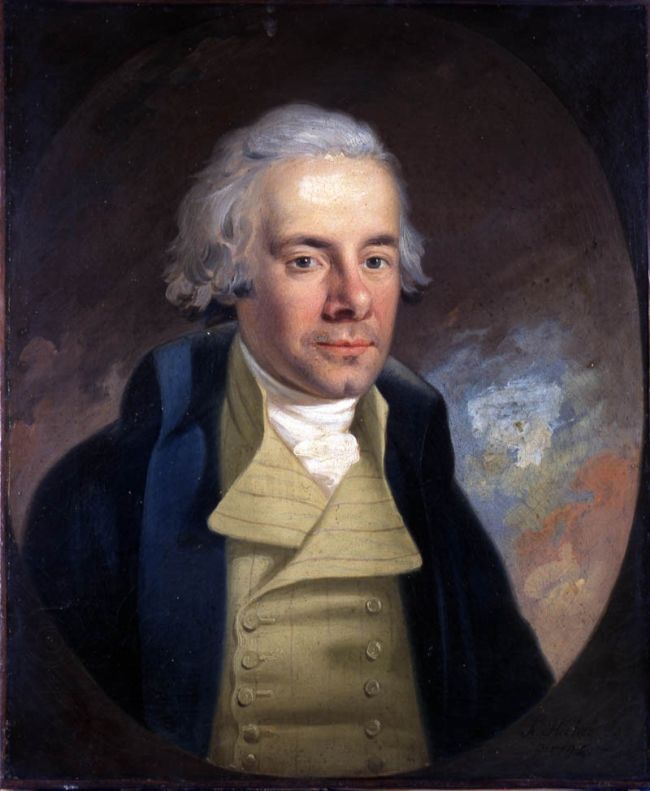
William Wilberforce became a fervent Christian, before he became a fervent abolitionists, and dedicated his life to ended it in the British Empire (which finally happened one month after his death).


William Wilberforce


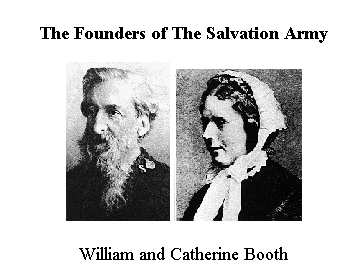
The Salvation Army was not founded by liberals who denied the deity of Christ, but by people who earnestly believed in the need for people to be transformed spiritualy by the Gospel.


It was not a denial of the teachings of the Orthodox Church that inspired Tsar Alexander II to abolish serfdom in Russia (before Lincoln freed a single slave in America), but his embrace of those teachings that led him to do this.


Tsar Alexander II


In the end, it is only the power of sincere Faith in God that has historically led to people voluntarily giving up power over the weak, and choosing mercy and justice over selfish interest. This requires a change in heart, and a mushy Christianity has historically failed to inspire people to even go to Church, much less to do anything really hard.

See also:

Stump the Priest: What about Slavery in the Bible?

Uncle Tom was no "Uncle Tom"

Saturday, January 15, 2005

Uncle Tom was no "Uncle Tom"

"Yes, Mas'r," said Tom, putting up his hand, to wipe the blood, that trickled down his face. "I'm willin' to work, night and day, and work while there's life and breath in me; but this yer thing I can't feel it right to do; - and, Mas'r, I never shall do it, - never!"


I just finished reading “Uncle Tom’s Cabin”, which I began reading because of my interest in the Civil War. It is unfortunate that this book, which has probably had the single greatest impact on American history of any book ever written, outside of the Bible, is not a text that every high school graduate has read and studied. It is also unfortunate that the key figure in this book has become a name of derision. Uncle Tom was not a submissive wimp, but was an image of Christ. He endured all manner of abuse that was heaped upon him, but willingly died to save others, by refusing to be complicit in evil.

It is fascinating to read a book that is earnestly trying to convince the reader of facts that are taken for granted now, but which were quite controversial at the time. This book sought to expose the evils of slavery to both North and South, and it did so by focusing not just on the obvious examples of evil, but by showing how even well intentioned people who thought that they were treating their slaves well could not guarantee that their slaves would not end up in the hands of evil men, due to unforeseen turns of event, such as the accumulation of debts or unexpected death.

There are two particularly moving scenes in this book:

There is the escape of Eliza, a beautiful slave with an infant, who due to the debts of her owners was sold to a man who thought she would fetch a high price at auction in New Orleans. Her owners had raised her in Kentucky, and had in many ways treated her like a daughter, but when faced with the choice between financial ruin and the sale of some of their slaves, chose to latter option. Slaves in border states generally were treated better, because it was easier for them to escape, but there was always the threat of being “sold down the river” to New Orleans, where they would wind up on a plantation in the deep south, where being worked to death was not an uncommon experience… or, if they were women of beauty, they might be sold into a life of shame. In any case, Eliza knew she would be separated from her husband, and likely separated from her baby. She chose to run, and in a scene that reminds one of the crossing at the Red Sea, she crosses the Ohio river by skipping across on ice patches. This incident was patterned on a true story, as are most of the incidents in this novel.


The trader caught a full glimpse of her just as she was disappearing down the bank; and throwing himself from his horse, and calling loudly on Sam and Andy, he was after her like a hound after a deer. In that dizzy moment her feet to her scarce seemed to touch the ground, and a moment brought her to the water's edge. Right on behind they came; and, nerved with strength such as God gives only to the desperate, with one wild cry and flying leap, she vaulted sheer over the turbid current by the shore, on to the raft of ice beyond. It was a desperate leap - impossible to anything but madness and despair; and Haley, Sam, and Andy, instinctively cried out, and lifted up their hands, as she did it. The huge green fragment of ice on which she alighted pitched and creaked as her weight came on it, but she staid there not a moment. With wild cries and desperate energy she leaped to another and still another cake; stumbling - leaping - slipping - springing upwards again! Her shoes are gone - her stockings cut from her feet - while blood marked every step; but she saw nothing, felt nothing, till dimly, as in a dream, she saw the Ohio side, and a man helping her up the bank.


Then there is the scene in which Tom is beaten to death by Simon Legree, for refusing to tell what he knows about two escaped slave women.


An't I yer master? Didn't I pay down twelve hundred dollars, cash, for all there is inside yer old cussed black shell? An't yer mine, now, body and soul?" he said, giving Tom a violent kick with his heavy boot; "tell me!"

In the very depth of physical suffering, bowed by brutal oppression, this question shot a gleam of joy and triumph through Tom's soul. He suddenly stretched himself up, and, looking earnestly to heaven, while the tears and blood that flowed down his face mingled, he exclaimed,

"No! no! no! my soul an't yours, Mas'r! You haven't bought it, - ye can't buy it! It's been bought and paid for, by one that is able to keep it; - no matter, no matter, you can't harm me!"


After reading this book it is easy to see how it was credited with starting the Civil War. It certainly brought the issue of slavery home, by causing people who had generally not thought deeply about it (since, after all, slavery had been the way of the world in every part of the globe since the fall of Adam) to see slavery from the vantage point of the slave, and to imagine what it must be like to see ones daughter bought by a scummy man who clearly had dishonorable intentions, to be separated from ones wife, or to face the uncertainty of a slave auction themselves.

What is most striking about this book is what a thoroughly Christian book it is. This book if full of Christian imagery, and sought to appeal to the Christian faith of its readers. This may explain why the book itself is generally not taught in public schools today. What a shame.